キルスイッチとは何ですか?緊急停止からスマートフォンのセキュリティまで
2月 13, 2026 • César Daniel Barreto
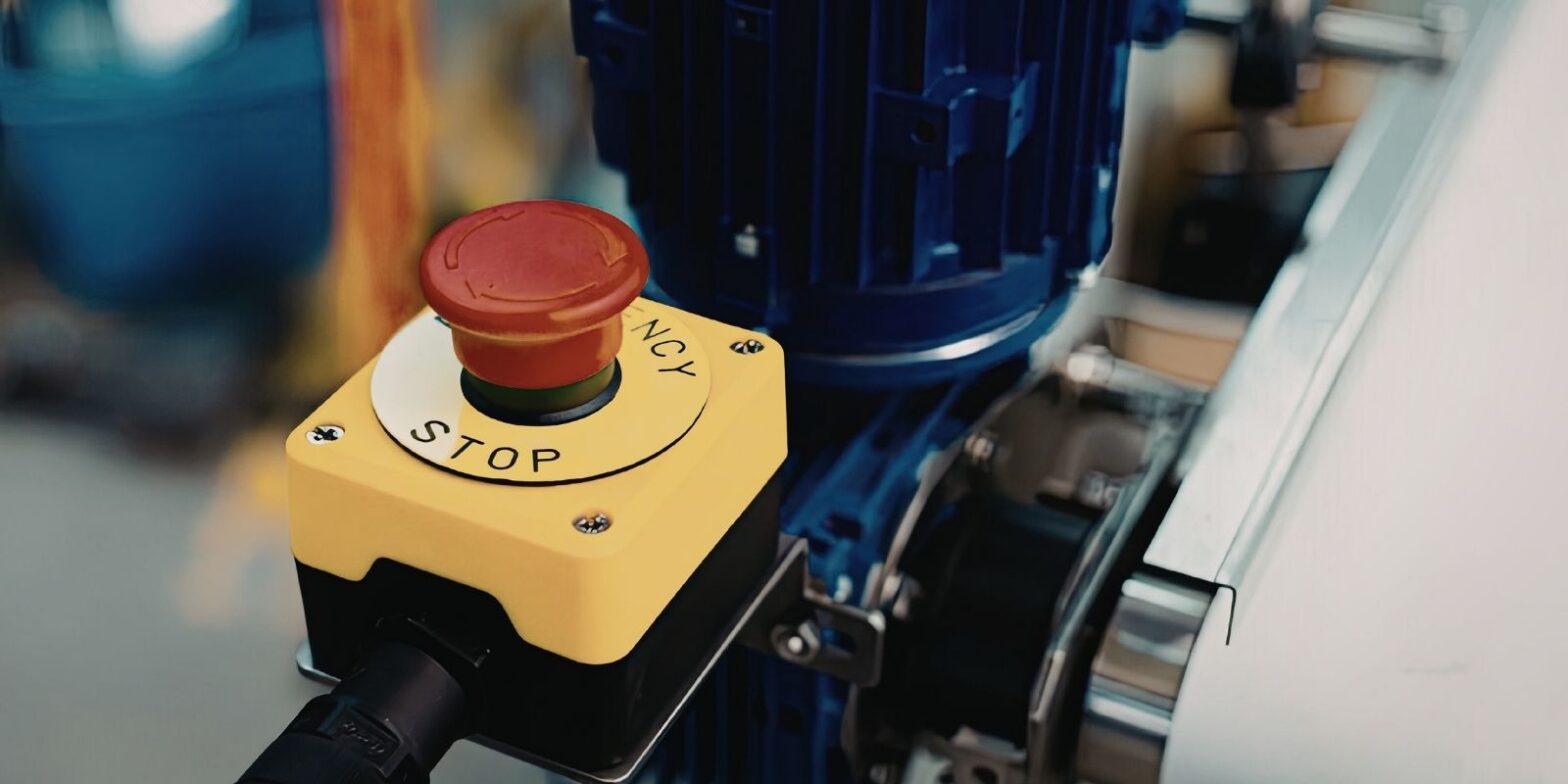
The need for immediate shutdown mechanisms has become increasingly important in today’s interconnected world. A kill switch is designed to stop a device, system, or process quickly to reduce harm, prevent theft, or block unauthorized access. From industrial machinery to smartphone security, kill switches help protect both physical assets and sensitive data.
Safety Mechanism
A kill switch is a safety mechanism built to shut down a device or process instantly when something goes wrong. Its main function is to reduce damage, injury, or misuse during emergencies. Often functioning as an emergency stop, it also serves as a fail-safe to protect systems from unauthorized access by stopping operation before a threat escalates.
Historically, kill switches began as physical controls, such as buttons or levers that could halt a machine immediately. As technology advanced, kill switches expanded into digital forms that can be built into software, networks, and connected devices.
Emergency Stop
An emergency stop is a common industrial version of a kill switch used to halt machinery instantly, similar to a dead man’s switch that automatically activates when an operator becomes unresponsive. It plays a key role in reducing workplace accidents, especially around heavy equipment. This fail-safe system ensures that emergency stop buttons are usually large, clearly marked, and easy to reach so they can be activated quickly by anyone nearby.
Because of their safety impact, emergency stops are standard requirements in many industrial environments.
Industrial Machinery
In industrial machinery, kill switches help prevent injuries and limit damage when equipment malfunctions or operators face unsafe conditions. These environments often involve high power, moving parts, and tight workflows, where delays can make incidents worse.
Many industrial kill switches are designed not only to stop motion, but also to isolate the machine from its power source so it cannot restart until the issue is addressed. This makes kill switches a core part of industrial safety standards and operational risk control, acting as an emergency stop to ensure immediate response in critical situations.
Anti-Theft System
Beyond industrial safety, kill switches are widely used in anti-theft systems for digital devices and vehicles. In this context, a kill switch can remotely disable a stolen device or vehicle, making it unusable and reducing its resale value.
For smartphones, this may involve locking the device, displaying a recovery message, or remotely erasing stored data. In vehicles, a kill switch can interrupt the ignition system or fuel supply, preventing the engine from starting or continuing to run.
By rendering stolen assets inoperable, kill switches act as both a recovery tool and a theft deterrent. Their integration into modern security systems highlights their adaptability across physical and digital environments.
Smartphone Security
As smartphones store increasing amounts of personal and financial information, built-in kill switch capabilities have become a central security feature. If a phone is lost or stolen, the owner can remotely lock the device, disable access, or erase sensitive data.
This function protects contacts, messages, authentication credentials, and payment information from misuse. In addition to data protection, a smartphone kill switch prevents unauthorized access to apps and connected services, reducing the risk of identity theft or account compromise.
In mobile ecosystems, the kill switch has evolved from a simple shutdown tool into a layered security control integrated with cloud-based management systems.
Software Kill Switch
In software development, a kill switch serves as a remote control mechanism that allows developers to disable specific features or entire services when necessary. This capability is especially valuable if a vulnerability, malfunction, or security flaw is discovered after deployment.
By deactivating the affected component instantly, developers can reduce exposure to exploitation while implementing a fix. Software kill switches are commonly built into cloud applications, SaaS platforms, and connected systems to provide rapid response without requiring full system shutdown.
This makes the software kill switch an essential tool for maintaining application stability, protecting user data, and managing operational risk.
Vehicle Safety
In the automotive industry, a kill switch functions as a protective control within a vehicle’s electronic systems. Modern vehicles rely heavily on computerized components for engine management, braking, fuel delivery, and safety monitoring. A kill switch can interrupt these systems when necessary, disabling the engine or other critical functions during emergencies.
Depending on the design, activation may be manual (such as a hidden ignition interrupt) or automatic, triggered by crash detection systems or electronic safeguards. Beyond emergency response, automotive kill switches also support anti-theft protection by preventing unauthorized ignition or engine operation.
This dual role, safety control and theft prevention, makes the kill switch an important feature in both private vehicles and commercial fleets.
Dead Man’s Switch
A dead man’s switch is a specialized form of kill switch that activates when an operator becomes unresponsive. Unlike standard kill switches, which are triggered intentionally, this system depends on continuous human input to remain active.
In rail transport, for example, train operators must maintain pressure on a control mechanism. If contact is lost due to incapacity, the system automatically engages and brings the train to a stop. Similar designs are used in heavy machinery, industrial equipment, and certain safety-critical operations.
While both systems serve shutdown purposes, the key distinction is dependency: a traditional kill switch requires activation, whereas a dead man’s switch activates through the absence of operator input.
AI Control
As artificial intelligence systems become more autonomous, the concept of a kill switch has expanded into AI governance and control frameworks. In AI applications, a kill switch acts as an override mechanism designed to interrupt or deactivate a system if it behaves outside defined parameters.
This safeguard can be manual, automated, or embedded within monitoring protocols that detect unsafe outputs or operational anomalies. The objective is not merely shutdown, but containment—ensuring that AI systems remain aligned with safety guidelines and operational boundaries.
In advanced environments such as robotics, autonomous vehicles, and large-scale automated decision systems, kill switches are increasingly viewed as essential control layers within responsible AI development.
Hardware Kill Switch
A hardware kill switch is a physical control that disables specific device components, such as cameras, microphones, wireless adapters, or Bluetooth modules. Unlike software-based controls, a hardware kill switch physically interrupts the electrical connection, making remote activation or bypass significantly more difficult.
These switches are commonly found in privacy-focused laptops, secure workstations, and specialized enterprise devices. By cutting off access at the hardware level, this type of kill switch prevents unauthorized surveillance, hidden data collection, or remote exploitation.
Because it operates independently of software, a hardware kill switch provides a higher level of assurance in environments where privacy and data protection are critical.
Quick Fix Summary
- Safety Mechanism: Essential for preventing harm and unauthorized access.
- Emergency Stop: Critical in industrial settings for halting machinery.
- Anti-Theft System: Protects devices and vehicles from theft.
- Smartphone Security: Ensures data protection and device control.
- Software Kill Switch: Allows remote deactivation of software features.
- Hardware Kill Switch: Physically disconnects components for privacy protection.
Kill Switch vs Dead Man’s Switch
| 特徴 | Kill Switch | Dead Man’s Switch |
|---|---|---|
| Activation | Manual, automatic, or remote | Triggered by absence of human input |
| Purpose | Immediate shutdown to prevent harm, theft, or malfunction | Stops operation if operator becomes incapacitated |
| Common Use | Industrial systems, vehicles, software, smartphones | Trains, heavy machinery, safety-critical operations |
| Human Dependency | Does not require continuous human presence | Requires continuous human interaction |
| Application Scope | Broad, across physical and digital systems | Specific to operator-dependent systems |
A kill switch is a versatile control mechanism designed to provide immediate shutdown capability across physical and digital systems. Whether used in industrial machinery, vehicles, smartphones, software platforms, or AI systems, its purpose remains consistent: maintain safety, protect assets, and preserve operational control.
As technology grows more interconnected and autonomous, kill switches continue to evolve from simple mechanical buttons to advanced digital safeguards. Their role in modern security frameworks makes them a foundational component of risk management and system reliability.
Advanced Kill Switch Applications
Kill switches extend far beyond basic emergency stops. As technology becomes more complex and interconnected, shutdown mechanisms are increasingly embedded into cybersecurity systems, power infrastructure, transportation, and remote control networks. These advanced implementations highlight how the core concept of a kill switch, immediate interruption, adapts across industries.
Malware Protection
In サイバーセキュリティ, a kill switch can function as a containment mechanism against malicious software. When abnormal behavior or malware is detected, the system can automatically isolate affected devices or sever network connections to prevent lateral spread.
This rapid isolation helps protect sensitive data, maintain operational continuity, and limit the scope of potential breaches. In enterprise environments, network-level kill switches are often integrated into intrusion detection and endpoint protection systems to support automated response protocols.
Emergency Power Off (EPO)
An Emergency Power Off (EPO) system is a specialized kill switch designed to cut electrical power instantly across critical infrastructure. EPO systems are commonly installed in data centers, laboratories, manufacturing plants, and other high-risk environments.
By disconnecting power at the source, these systems protect personnel from electrical hazards and prevent equipment damage during emergencies. Unlike standard shutdown procedures, an EPO prioritizes speed and safety over operational continuity.
Remote and Manual Activation
Kill switches can operate through manual controls, automated triggers, or remote commands.
- Manual activation allows on-site personnel to respond immediately using physical controls.
- Remote activation enables operators to disable systems from a distance, particularly useful when direct access is unsafe or impractical.
- Automated activation can occur when predefined conditions are met, such as system faults, abnormal metrics, or security violations.
This layered activation structure enhances flexibility while maintaining centralized control.
Wireless Control
Wireless kill switch systems eliminate the need for fixed wiring, allowing shutdown commands to be transmitted via secure communication channels. This approach is particularly valuable in mobile systems, temporary installations, and distributed infrastructure.
However, wireless control mechanisms must incorporate encryption and authentication safeguards to prevent unauthorized triggering.
Engine Shutdown and Fuel Cut-Off
In automotive and aviation systems, kill switches often operate through engine shutdown or fuel interruption mechanisms. By disabling ignition circuits or halting fuel delivery, these systems prevent continued operation during emergencies or unauthorized access attempts.
Such systems are integral to fleet management, vehicle recovery services, and emergency response protocols.
Ignition Control and Propeller Declutch
Certain transportation systems incorporate specialized kill switch functions. Ignition control switches prevent vehicles from starting without authorization, adding an extra theft-prevention layer.
In marine environments, a propeller declutch mechanism disengages propulsion systems from engine power, allowing immediate stopping capability. These controls enhance operational safety in high-risk conditions.
よくある質問
What happens to a car when a kill switch is activated?
When activated, a vehicle kill switch interrupts critical systems such as ignition or fuel delivery. The engine either stops running or cannot start, effectively immobilizing the vehicle.
Why install a kill switch in a car?
Vehicle kill switches are commonly installed as anti-theft measures. By disrupting ignition or fuel systems, they reduce the likelihood of unauthorized operation.
Do kill switches prevent theft?
While no system guarantees absolute prevention, kill switches significantly increase the difficulty of theft by rendering the vehicle inoperable.
How does a kill switch work?
A kill switch works by interrupting power flow or system functionality. This may involve cutting electrical circuits, disabling software processes, isolating networks, or halting fuel delivery, depending on the application.
要点
Kill switches are indispensable tools across a wide range of applications, from cybersecurity to automotive safety. Their ability to provide immediate and decisive control over systems makes them invaluable in both emergency situations and routine operations. Understanding the diverse applications of kill switches can empower individuals and organizations to implement effective safety and security measures.

セサル・ダニエル・バレット
セザール・ダニエル・バレットは、サイバーセキュリティのライターであり、専門家として知られている。 複雑なサイバーセキュリティのトピックを単純化する彼の深い知識と能力で知られています。ネットワーク セキュリティとデータ保護における豊富な経験を持ち、定期的に最新のサイバーセキュリティ動向に関する洞察に満ちた記事や分析を寄稿している。 を寄稿し、専門家と一般市民の両方を教育している。
 Japanese
  English
  German
  Danish
  Italian
  Swedish
  Romanian
  Thai
Thai  Vietnamese
  Dutch
Dutch  Korean
  Arabic
  Hungarian