AI-Powered Deepfake Attacks: More Than Just a PR Problem
January 19, 2026 • César Daniel Barreto
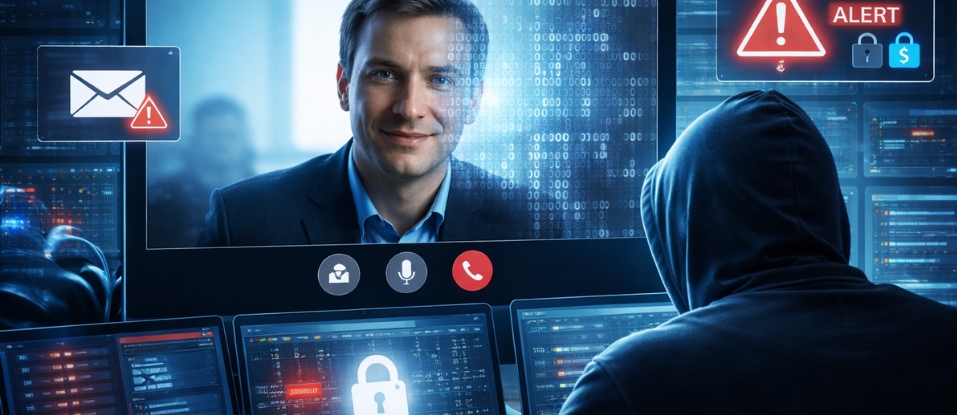
Deepfakes no longer sit on the fringe of internet culture as novelty clips or celebrity parodies. Rapid advances in artificial intelligence have turned synthetic voice and video into reliable tools for deception, fraud, and unauthorized access. What once required specialized skills and long preparation now happens with widely available software and minimal effort, which shifts deepfakes from curiosity to a credible threat. Trust is at the center of this change. Many digital services depend on people believing what they see and hear in real time. From enterprise video meetings to platforms that encourage users to video chat and date with real girls as a way to build genuine online connections, authenticity is what makes these interactions work.
Why Deepfakes Have Become a Security Issue — Not a Media One
Early discussions around deepfakes focused on public embarrassment, misinformation, and brand image. Those risks still exist, yet they no longer define the main danger. Modern deepfake attacks target operational decisions, financial workflows, and access controls.
A familiar voice or a face people recognize can get past internal safeguards faster than many traditional technical attacks. By leaning on urgency or authority, attackers pressure their targets to act before there’s time to question what’s happening. The consequences tend to be immediate and concrete: money lost, data exposed, or internal rules quietly broken.
How AI-Powered Deepfakes Actually Work
AI-powered deepfakes are created using systems that learn directly from real human voices and faces. Over time, they pick up on patterns in speech, movement, and expression, then recreate them with unsettling accuracy. As training techniques have improved and processing power has become faster and more accessible, these tools no longer depend on long wait times or specialized hardware.
That shift in speed changes the equation. Deepfakes can now be produced and deployed in real time, making them easier to misuse and much harder to detect while they’re happening.
From Generative Models to Real-Time Impersonation
Modern deepfakes are powered by generative models trained on voice recordings and video footage. These systems break down how a person sounds and moves, studying tone, pacing, facial motion, and even subtle micro-expressions. Once that learning phase is complete, they can reproduce someone’s likeness during live conversations.
What makes this especially difficult to detect is speed. Real-time synthesis removes the pauses and visual glitches that once gave fake content away. As a result, impersonation can happen smoothly, often without raising immediate suspicion.
Why Voice and Video Are Harder to Verify Than Emails
Email security has the advantage of technical signals. Headers, sender domains, and authentication protocols offer concrete ways to check legitimacy. Voice and video don’t work that way. They rely almost entirely on human perception. A familiar voice, a recognizable face, and a conversation that flows naturally all create a sense of trust.
Attackers lean heavily on those cues, especially when time pressure is involved. In those moments, people tend to rely on instinct rather than verification, which makes voice and video far easier to exploit than text-based communication.
Deepfakes as an Entry Point, Not the End Goal
In many cases, synthetic media is just the opening move. A convincing video call can establish authority or trust, setting the stage for what comes next. That might be a request for credentials, approval of a payment, or access to sensitive systems. The pattern closely resembles spear phishing, but with a higher success rate, largely because the interaction feels real.

Combining Deepfakes With Phishing, BEC, and Malware
Attackers increasingly blend deepfakes with established techniques to accelerate impact:
- Voice impersonation that confirms fraudulent wire transfer requests
- Video calls that instruct employees to open malicious attachments
- Synthetic executives that validate phishing emails during live conversations
- Fake vendor meetings that lead to compromised credentials.
These combinations shorten decision time and reduce skepticism by reinforcing false authority across multiple channels. Each added layer increases credibility while masking the technical origin of the attack.
Why Remote and Hybrid Work Amplify the Risk
Distributed teams rely on digital channels for everyday decisions. Video calls replace in-person verification, and asynchronous workflows reduce informal checks. These conditions normalize interaction with unfamiliar faces, which benefits attackers who depend on quick trust.
Financial Fraud and Executive Impersonation
Several cases involve synthetic voices that mimic senior leaders. Attackers request urgent transfers, cite confidential deals, and discourage verification. Finance teams comply because the voice matches expectations and context feels legitimate. Losses often reach significant levels before detection.
Credential Theft Through Synthetic Trust
Deepfake video calls also support credential theft. Attackers pose as IT staff or external auditors and guide targets through login steps or access changes. Once credentials are transferred, attackers gain persistent access that extends far beyond the initial interaction.
Why Traditional Security Controls Struggle With Deepfakes
Many security controls focus on static authentication and technical indicators. Deepfakes exploit gaps between systems and human decision-making.
- Multi-factor authentication protects logins but not approval requests.
- Email filters address text-based threats, not synthetic voices.
- Voice biometrics fail against high-quality cloning.
- Awareness training often assumes obvious warning signs.
Together, these gaps allow deepfake attacks to bypass controls that were never designed to evaluate real-time human interaction.
Identity Is the New Target
Deepfakes attack identity rather than infrastructure. They manipulate how people recognize authority, legitimacy, and urgency. This focus shifts risk from systems to human trust.
Security strategies that treat identity as a fixed credential miss how attackers exploit context and familiarity. A believable face on a screen carries weight even when access controls remain intact.
Deepfakes vs. Identity and Access Management
Identity and access management tools enforce permissions and authentication. They limit damage after compromise and support auditing. They do not address manipulation during conversations. IAM remains essential, yet it cannot counter real-time deception on its own.
Trust Signals That Can No Longer Be Trusted
Visual presence, voice recognition, and perceived authority once reduced friction. Deepfakes erode their reliability. Organizations must assume that appearance alone no longer proves identity during sensitive interactions.
Why Purely Technical Detection Has Limits
Automated detection faces false positives and rapid model improvement. Visual artifacts disappear as techniques evolve, which fuels an arms race between attackers and defenders. Overreliance on detection delays action when confidence remains uncertain.
The Role of Process, Verification, and Escalation
Clear procedures reduce damage. Verification steps for financial approvals, access changes, and sensitive requests create friction where it matters. Escalation paths allow employees to pause and confirm without fear of delay. Human-in-the-loop safeguards add resilience beyond automation.
Training Employees to Challenge “Authentic” Signals
Good training turns doubt into professionalism. Employees learn to check even voices they know when they are doing important things. Scripts and checklists help people make calm decisions when they’re under pressure and less depend on their gut feelings.
What Organizations Should Rethink Now
Scenarios for synthetic media should be part of security planning. Approval workflows need a second check. Plans for responding to incidents should include impersonation events as well as regular breaches. When security, legal, and leadership teams are on the same page, they will all react the same way in high-pressure situations.

Policies that encourage callbacks, written confirmation, and separation of duties reduce success rates without disrupting normal operations.
Deepfakes Are a Security Problem First — And Forever
AI-powered deepfakes exploit the same foundation that modern digital work relies on: trust at a distance. As realism improves, these attacks will grow quieter and faster. Treating them as temporary media issues understates their impact.
Deepfakes challenge how organizations verify identity, authorize action, and respond to urgency. Those challenges place them at the core of cybersecurity strategy. The threat will persist, evolve, and demand structural change rather than surface fixes.

César Daniel Barreto
César Daniel Barreto is an esteemed cybersecurity writer and expert, known for his in-depth knowledge and ability to simplify complex cyber security topics. With extensive experience in network security and data protection, he regularly contributes insightful articles and analysis on the latest cybersecurity trends, educating both professionals and the public.
 English
  German
  Danish
  Italian
  Swedish
  Romanian
  Thai
Thai  Vietnamese
  Japanese
  Dutch
Dutch  Korean
  Arabic
  Hungarian