Enhancing security with innovative access control solutions
January 13, 2026 • César Daniel Barreto
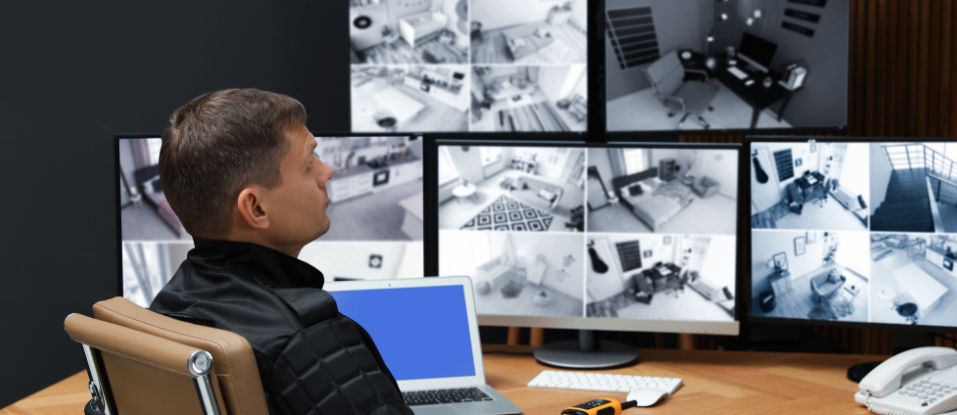
In a world that moves as quickly as ours does, security has become a constant concern, both for businesses and for individuals. As technology evolves, the tools meant to protect people, spaces, and data evolve with it. One area that has quietly grown in importance is access control.
At its core, access control is about deciding who gets in and who doesn’t. It governs entry to buildings, systems, or specific resources, and it often works in the background. When done well, it becomes a key layer of protection, helping keep sensitive areas secure and limiting the risk of unauthorized access.
The evolution of access control systems
Access control systems have changed a lot over time. What once depended almost entirely on physical locks and keys has gradually shifted toward more flexible, technology-driven solutions. Each step in that evolution has followed the same goal: making security stronger and easier to manage.
Today, electronic access control systems provide a much stronger layer of protection. Rather than depending on a single physical key, access can be managed through keycards, biometric identifiers, or even mobile phones. This makes it easier to control who can enter certain areas and at what times, while also reducing many of the risks that come with traditional keys.
Key components of modern access control systems
Behind the scenes, these systems are built from a few essential parts that work together to keep everything running smoothly. Each element has its own purpose, and the system only works properly when they’re aligned.
- Credential readers
These are the devices that recognize access credentials, whether that’s a keycard, a fingerprint, or another biometric identifier. They act as the first checkpoint at the door. - Control panels
Often hidden from view, control panels function as the system’s decision-makers. They receive access requests, check them against stored permissions, and decide whether entry should be allowed or denied. - Software
This is where everything is managed. Through dedicated software, administrators can set access rules, adjust permissions, and keep an eye on activity logs to spot unusual behavior or potential issues.
Together, these components form the backbone of a modern access control setup, balancing convenience with security.
Benefits of implementing advanced access control
Switching to a more advanced access control system tends to bring practical benefits pretty quickly. Better security is the obvious one, but it’s rarely the only change people notice. Day-to-day operations often become easier to manage, and there’s usually a clearer sense of how spaces are actually being used.
Having a record of entries and exits makes it simpler to spot anything out of the ordinary and to limit unauthorized access. Over time, those logs can reveal patterns that aren’t always obvious, like peak hours or areas that see very little activity. Many modern systems also work well alongside cameras, alarms, and other security tools, which helps everything feel connected instead of patched together.
Innovative solutions from ILOQ
Among the companies taking a slightly different route in access control, ILOQ is often mentioned for how it approaches the problem. Instead of adding more hardware or complex wiring, the focus has been on simplifying the system itself. Their electronic locks work without batteries or cables, changing how access can function in everyday settings.
The technology generates the energy it needs at the moment the key is used, removing the need for constant power or frequent maintenance. It’s a low-profile approach that puts reliability first and reduces long-term upkeep. Sustainability, in this case, isn’t a separate feature but part of how the system is designed from the start.
Challenges in access control implementation
Even with all its benefits, setting up an access control system is rarely a smooth process. Budget is usually the first hurdle people think about, but it’s far from the only one. Systems also need room to grow, especially if an organization is likely to expand or change. And then there’s compatibility. Making new technology work alongside older infrastructure often turns out to be trickier than expected.
Before committing to a solution, it helps to slow down and look at what the space actually needs. What works perfectly in one building might make little sense in another. The human side matters too. Without proper training, even a well-designed system can end up underused or mismanaged, limiting its effectiveness over time.
The future of access control technology
As technology keeps moving forward, access control is likely to change with it. Biometric authentication, mobile-based access, and cloud-managed systems are already reshaping how security is handled, and their role will only grow over time.
What these developments really offer is flexibility. Access can be managed remotely, adjusted quickly, and adapted to different environments without the heavy infrastructure older systems required. For organizations, that means protecting people and assets becomes less about rigid barriers and more about smart, responsive control.

César Daniel Barreto
César Daniel Barreto is an esteemed cybersecurity writer and expert, known for his in-depth knowledge and ability to simplify complex cyber security topics. With extensive experience in network security and data protection, he regularly contributes insightful articles and analysis on the latest cybersecurity trends, educating both professionals and the public.
 English
  German
  Danish
  Italian
  Swedish
  Romanian
  Thai
Thai  Vietnamese
  Japanese
  Dutch
Dutch  Korean
  Arabic
  Hungarian