Glock FRT in 2026: Legal Status, Real Risks, and What’s Actually on Sale
May 22, 2026 • César Daniel Barreto

The legal landscape around Glock FRT and handgun forced reset triggers in 2026 is significantly different from rifle FRTs.
“Glock FRT” is one of the highest-volume firearms-related searches of 2026. Most of that volume comes from a real misunderstanding: people read about the federal legalization of Forced Reset Triggers (FRTs) after the May 2025 DOJ settlement and assume the legalization applies to all FRTs, including ones marketed for Glock pistols. It does not. The settlement specifically excluded handgun FRTs. Combined with the long-running federal enforcement on “Glock switches,” that makes the Glock FRT market the most legally hazardous corner of an otherwise-now-legal category. This article walks Glock owners through what actually changed, what didn’t, what’s on the shelves in 2026, and what to do if you’ve already bought a product in this space.
TL;DR: The Short Answer
- Are FRTs legal in 2026? Rifle FRTs (AR-15, AK, SKS-pattern, etc.) are federally legal after the May 2025 DOJ settlement with Rare Breed Triggers and the 2024 Supreme Court ruling in Garland v. Cargill. Roughly 15 US states still restrict or ban them.
- Are Glock FRTs legal? Significantly riskier. The Rare Breed settlement explicitly prohibits Rare Breed from designing, marketing, or producing FRTs for handguns. Third-party Glock FRTs being sold in 2026 are not covered by the settlement and are sold into a federal enforcement environment that aggressively targets “Glock switch” / pistol conversion devices.
- What is the legal exposure? Possession of a device that ATF considers a machine-gun conversion device can carry up to 10 years federal prison and a $250,000 fine, even if the device is never installed. Mandatory minimums jump much higher if the device appears alongside a violent or drug-trafficking arrest.
- What is on the market for Glock? Several online sellers list “Glock FRT” products priced around $90 to $150. None are protected by the Rare Breed settlement. The most prominent seller, Texas Trigger USA, posts state-restriction lists on its per-product pages but no federal-compliance statement or ATF determination-letter reference.
- What should a Glock owner do? Do not buy. If you already own one, talk to a firearms attorney about your specific situation before doing anything else.
What Changed in 2024 and 2025 (Plain English)
Two regulatory events reshaped the FRT landscape and matter for understanding the current “Glock FRT” situation.
2024: Garland v. Cargill (Supreme Court)
In June 2024 the US Supreme Court ruled in Garland v. Cargill that bump stocks are not “machine guns” under the National Firearms Act. The court’s reasoning hinged on the statutory phrase “single function of the trigger.” A device that requires a distinct trigger function for each round fired, the court held, does not meet the federal machine-gun definition.
That decision applied directly to bump stocks but laid the legal groundwork for FRT cases. FRTs work by mechanically forcing the trigger back to its reset position after each shot, but they still require a distinct trigger function for each round, so under the Cargill reasoning they too were not “machine guns” under the NFA definition.
May 2025: DOJ / Rare Breed Settlement
In May 2025, the Department of Justice settled all pending federal litigation with Rare Breed Triggers, the most prominent FRT manufacturer. According to the DOJ press release, the settlement included three operational changes:
- The federal government stopped enforcing NFA machine-gun classification against Rare Breed’s FRT-15 and Wide Open Trigger (WOT) products.
- The ATF was ordered to return previously seized FRTs to their owners, with a deadline of 30 September 2025.
- Rare Breed agreed not to design, develop, manufacture, market, or promote FRTs for use in handguns.
The third item is the critical carve-out for anyone searching “Glock FRT.” Rare Breed itself, the company that won the legal fight, is not allowed under the settlement to make a Glock FRT. The product you find on third-party seller pages is from other vendors, was not part of the litigation, and is not covered by the settlement.
“Glock FRT” vs. “Glock Switch”: What ATF Actually Targets
Two related-but-distinct device categories often get confused in search results and casual conversation.
| Term | What it usually refers to | Federal classification |
|---|---|---|
| Glock switch (auto sear) | A small part (often 3D-printed) that converts a Glock pistol from semi-automatic to fully automatic. ATF considers the device itself, even uninstalled, a machine gun under the NFA. | Machine gun under federal law (NFA). Penalty up to 10 years federal prison and $250K fine, even if never installed. |
| Glock FRT | A trigger-group product marketed for Glock pistols that uses a forced-reset mechanism to increase rate of fire. | Outside the Rare Breed settlement carve-out. ATF classification varies by specific product and may shift; legal status is unsettled and disputed. |
From a practical enforcement standpoint, the line between “an FRT marketed for Glock” and “a Glock conversion device” is blurry and is exactly the kind of line ATF has historically interpreted broadly. The federal Bureau of Alcohol, Tobacco, Firearms and Explosives publishes guidance and enforcement updates on its FRT and conversion device pages, and recent operations such as DOJ’s 2024 “Operation Texas Kill Switch” produced dozens of arrests specifically targeting pistol conversion devices.
What Is Actually Being Sold for Glock in 2026
To make the discussion concrete, here is a snapshot of what one US-based online seller, Texas Trigger USA, lists in its FRT product category at the time this article was reviewed. The listings include both rifle FRTs (covered by the post-settlement legal landscape) and several handgun FRTs (outside that landscape and the focus of this advisory).
| Product | Platform | Listed price | Post-settlement coverage? |
|---|---|---|---|
| Norinco SKS 7.62×39 FRT (preorder) | SKS rifle | $195 (sale from $225) | Rifle category; legal under current federal interpretation (state-dependent) |
| Diablo Trigger AK-47 FRT | AK rifle (PSA, Century Arms, Zastava) | $225 | Rifle category; legal under current federal interpretation (state-dependent) |
| FB Beryl & Tantal FRT | Polish service rifles (Beryl 5.56, Beryl 7.62×39, Tantal 5.45) | $250 | Rifle category; legal under current federal interpretation (state-dependent) |
| Canik FRT | Canik handgun (METE SF/SFX/SFT, Rival, TTI Combat, TP9) | $95 (sale from $125) | Handgun. Outside the Rare Breed carve-out. |
| Glock FRT (Gen 1–6) | Glock pistol (excludes Glock 44 .22LR) | $110 | Handgun. Outside the Rare Breed carve-out. |
| TX22 FRT | Taurus TX22 pistol | $38 (sale from $50) | Handgun. Outside the Rare Breed carve-out. |
The seller posts state-restriction lists on its per-product pages (typically CA, CT, DE, FL, HI, IL, MA, MD, MI, MN, NJ, NV, NY, OR, RI, WA, DC, plus “no US Territories” and “no international orders”). The pages do not, however, reference any ATF classification opinion or determination letter for the specific product, and the marketing language is conspicuously cautious. The Glock product, for example, is titled “Glock FRT (Gen 1–6)” in the URL and category but described in the product body as a “Billet Aluminum Flat Trigger Shoe Kit.” That framing is itself a tell: a seller confident in a federal classification would not need the wordplay.
The Glock product in detail
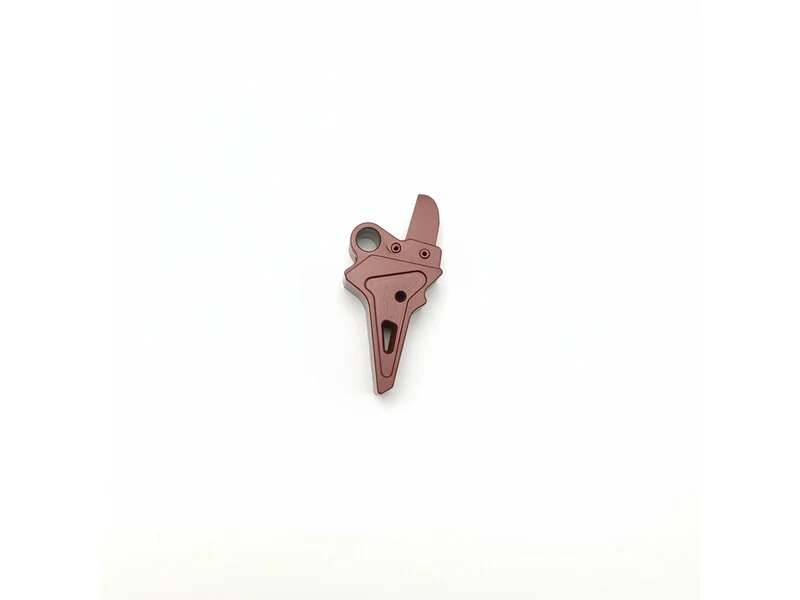
- Product name: Glock FRT (Gen 1–6)
- Price: $110
- Marketing description: “Billet Aluminum Flat Trigger Shoe Kit,” CNC-machined, Cerakote finish, available in black or red, with raised-radiused or plain flat-face options.
- Compatibility: Glock Gen 1 through Gen 6 pistols. Explicitly does not fit the Glock 44 (.22 LR variant). For Gen 5 and Gen 6, the seller notes that the ambidextrous slide release must be replaced with a Gen 4 slide release.
- Additional parts the seller says may be needed: a 20-lb-plus recoil spring and a 3.5-lb trigger kit with connector.
- Seller’s own installation guidance: “Requires fitting and tuning for proper operation… some filing or trimming may be necessary… professional installation by a qualified gunsmith is strongly recommended… no troubleshooting or technical support will be provided for self-installations.”
- State restrictions posted on the page: CA, CT, DE, FL, HI, IL, MA, MD, MI, MN, NJ, NV, NY, OR, RI, WA, DC.
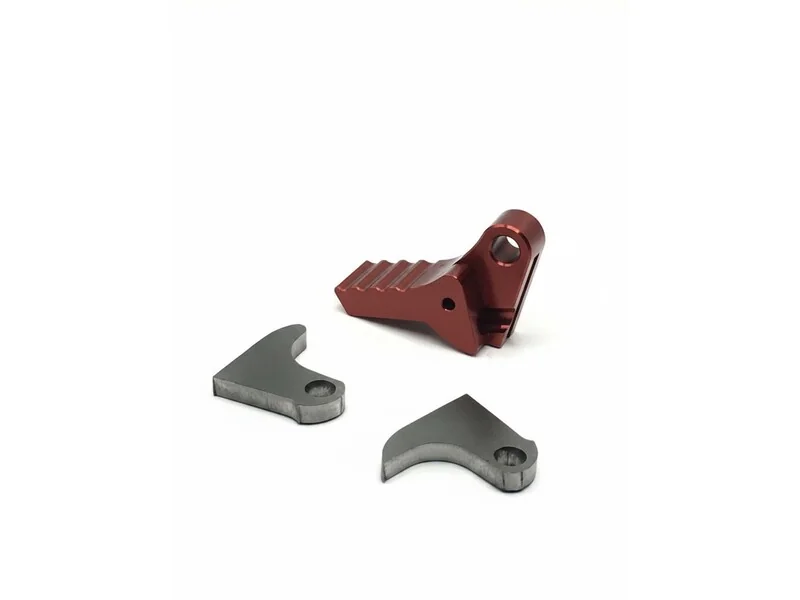
The other handgun FRT (Canik), for context
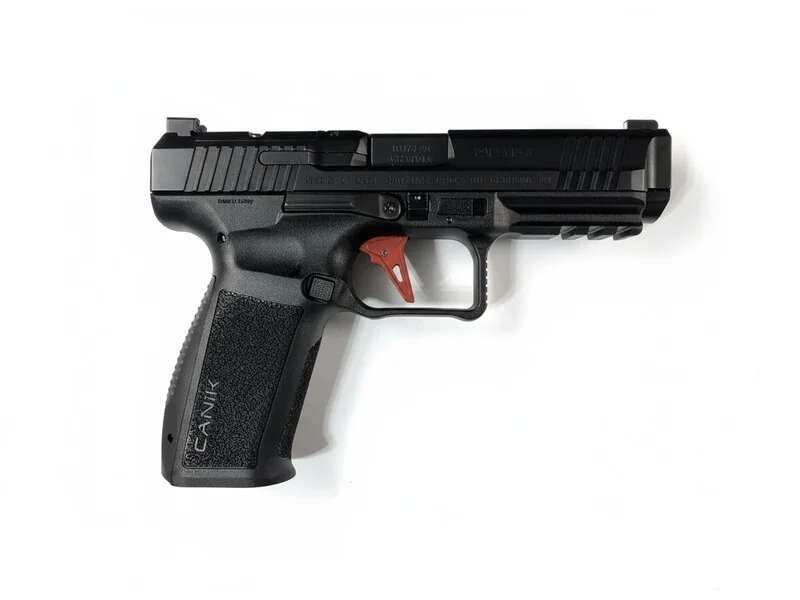
The Canik FRT shares the structural issue: same vendor, same product family, same handgun-platform legal exposure outside the Rare Breed settlement, same “requires tuning or additional components” caveats from the seller. The compatibility list spans the Canik METE SF, SFX, SF PRO, SFX PRO, SFT, SFT PRO, SFX Rival, Rival-S, TTI Combat, and TP9 Elite. The seller notes that the TP9 Elite specifically requires a 22-lb recoil spring and heavier ammunition. The legal-risk discussion in this article applies equally to any of the handgun FRT products in the seller’s lineup.
For comparison: the rifle FRTs in the same lineup

The rifle products in the same lineup (Norinco SKS, Diablo Trigger AK-47, FB Beryl & Tantal) sit in the post-settlement federal landscape that the Garland v. Cargill ruling and the Rare Breed settlement actually addressed. They are still subject to state restrictions in the same roughly 15 states, and they still require fitting on most OEM trigger groups, but they are not in the same federal-exposure category as the handgun products from the same seller. The distinction matters: someone shopping the same online store could click a $110 Glock FRT and a $225 AK-47 Diablo Trigger in the same cart, and the legal exposure of those two items is wildly different.
The Real Legal Exposure for Glock-Pistol FRT Buyers
Three federal statutes can apply, depending on how ATF classifies the specific device and how it is possessed:
- 18 U.S.C. § 922(o) (Gun Control Act): prohibits civilian possession of machine guns manufactured after 19 May 1986. Penalty up to 10 years federal prison and $250,000 fine.
- National Firearms Act (26 U.S.C. § 5861): prohibits possession of unregistered NFA items. Carries up to 10 years federal prison and a separate fine of up to $10,000.
- 18 U.S.C. § 924(c): if any of the above is used during a violent crime or drug trafficking offense, a mandatory minimum of 30 years is added consecutively to whatever else is charged.
In practice, a single arrest involving a pistol conversion device often results in charges under multiple statutes. Possession alone, with no evidence of use, can still trigger federal prosecution. And critical for Glock owners: ATF and federal prosecutors have repeatedly taken the position that the device itself is the machine gun, meaning possession of the part is enough; you do not need to have installed it.
State-Level Restrictions That Apply to All FRTs
Even for products that ARE covered by the post-settlement federal landscape (rifle FRTs from Rare Breed and similar), roughly 15 US states maintain restrictions or outright bans on devices described as “rapid-fire trigger activators” or similar state-law definitions. Reported restrictive states include:
- California
- Connecticut
- Delaware
- Hawaii
- Illinois
- Maryland
- Massachusetts
- New Jersey
- New York
- Oregon
- Rhode Island
- Washington
- District of Columbia
Several additional states are actively considering similar legislation. State definitions vary widely and can apply to devices that are federally permissible. For Glock-specific products, state law adds an additional layer of risk on top of the federal exposure that already exists.
Red Flags When Shopping (Especially for Glock Products)
Glock FRT search results have become a magnet for both legitimate sellers operating in a legally hazardous niche and outright scam sellers taking advantage of search demand. Patterns to be cautious of:
- The seller has no posted federal-compliance statement, no state-restriction notice, and no required buyer affirmation at checkout.
- The seller asks you to ship to an address other than your own, or invites you to bypass an FFL transfer for a part that arguably requires one.
- The product is marketed as a “Glock FRT” or “rate-increase trigger” without naming a specific ATF classification opinion or determination letter on file.
- The seller accepts cryptocurrency or gift cards as the preferred payment method.
- The product is sold through a freshly-registered domain or a website without a verifiable US business address.
- The site uses fake “as seen on” badges (CNN, Fox, etc.) without verifiable links to those coverage stories.
- The product page mentions “100% legal in all 50 states” without sourcing, no FRT product, even rifle-platform, is legal in all 50 states.
Several outright phishing and credit-card-skimming sites have used “Glock FRT” or “Glock switch” keywords as a lure. If the price is dramatically below market, treat that as a stronger negative signal than a positive one.
What to Do If You Already Bought a Glock FRT
This is the question that does require professional advice rather than a generic answer. The right next step depends on your state, the specific product, whether you’ve installed it, and your personal legal history. A few general orientations:
- Consult a firearms attorney licensed in your state and familiar with NFA matters before doing anything else. Not a generalist criminal defense lawyer; one with NFA experience. This call is usually the first $200 to $500 you should spend.
- Do not install or use the device pending that conversation. Whatever the federal classification debate, installing or using one without legal clarity multiplies exposure substantially.
- Do not simply return or destroy the device on your own without legal advice. Some return and destruction approaches create their own paper trail or evidentiary issues.
- Do not post on social media about ownership, installation, or any rate-of-fire testing. Federal prosecutors routinely use defendants’ own social-media posts as evidence in conversion-device cases.
- Be cautious about “amnesty” assumptions. The 2025 settlement included a return-of-seized-property provision but did not create a generalized amnesty for handgun FRT possession. Any amnesty pathway, if one exists for your situation, is fact-specific.
For Glock Owners Who Just Want a Better Trigger
The legitimate trigger-upgrade market for Glock pistols is large, well-established, and entirely outside the conversion-device legal zone. If your underlying goal is a lighter, crisper, or more consistent pull on a Glock for sport, defensive carry, or general improvement, the standard non-FRT options include:
- Drop-in trigger kits from major aftermarket vendors (ZEV, Apex, Overwatch, Timney, and others) that improve pull weight and feel without changing the firing mode.
- Connector replacements (“minus connector,” “dot connector,” etc.) that reduce pull weight modestly.
- Polished OEM parts for the cheapest, lowest-risk improvement.
- Glock Performance Trigger (Glock’s own factory aftermarket trigger) for OEM-supported upgrade with no third-party ambiguity.
All of these are widely available through normal FFLs, sold without legal disclaimer because none changes the firearm’s federal classification, and produces measurable improvement for the sporting and defensive use cases that drive most upgrades.
FAQ
What does FRT stand for?
FRT stands for Forced Reset Trigger. It is a class of trigger-group products that mechanically force the trigger to return to its reset position after each shot, allowing faster cyclic fire than a standard semi-automatic trigger.
Are FRTs legal in the US in 2026?
For rifle platforms (AR-15, AK, SKS-pattern, etc.), yes at the federal level, following the May 2025 DOJ settlement with Rare Breed Triggers and the 2024 Supreme Court ruling in Garland v. Cargill. Roughly 15 US states maintain restrictions or bans. For handgun platforms including Glock, the legal picture is significantly more hazardous because the settlement explicitly excluded handgun FRTs and ATF continues to target pistol conversion devices aggressively.
Is a Glock FRT the same as a Glock switch?
Not technically. A Glock switch (or auto sear) is a small part that converts a Glock to fully automatic fire and is classified as a machine gun by ATF under the NFA. A Glock FRT is a trigger product that increases rate of fire via forced reset and is in a more debated classification space. In practical enforcement terms, both sit in the same federal risk zone and both attract aggressive ATF attention.
What is the penalty for possessing a Glock conversion device?
Federal possession can carry up to 10 years in federal prison and a $250,000 fine under 18 U.S.C. § 922(o), plus separate NFA charges with their own penalties. If the device is involved in a violent crime or drug-trafficking arrest, a mandatory minimum 30-year consecutive sentence can apply under 18 U.S.C. § 924(c). This is general information, not legal advice for any specific case.
Did the May 2025 settlement legalize Glock FRTs?
No. The settlement was between DOJ and Rare Breed Triggers and specifically applied to Rare Breed’s rifle products (FRT-15 and Wide Open Trigger). The settlement also includes an express prohibition on Rare Breed designing, manufacturing, or marketing FRTs for handguns. Other vendors’ handgun FRT products are not covered by the settlement.
Can I buy a Glock FRT online if the seller offers it?
“Available for sale” and “legal to possess” are not the same thing. Multiple US-based websites list Glock FRT products without posted compliance statements. The federal enforcement environment around pistol conversion devices and Glock switches is unchanged after the rifle-FRT settlement. Buying one carries meaningful federal exposure regardless of the seller’s checkout flow.
I already bought one. What should I do?
Consult a firearms attorney licensed in your state and familiar with NFA matters before doing anything else, including installing, using, returning, or destroying the device. The right next step is fact-specific and depends on your state, the specific product, and your personal circumstances.
I just want a better Glock trigger. What are the safe options?
The legitimate Glock aftermarket trigger market is large and outside the conversion-device legal zone. Major vendors include ZEV, Apex, Overwatch, Timney, and Glock’s own factory Performance Trigger. These improve pull weight, feel, and consistency without changing the firearm’s federal classification, are sold without legal disclaimer, and are widely available through normal FFLs.
Final Notes
The 2025 changes to the federal FRT picture have been widely reported, often without the carve-out that matters most for Glock owners. The bottom-line distinction worth carrying forward: rifle FRTs from major manufacturers like Rare Breed sit in the now-legal-federal column. Glock and other handgun FRT products do not, and the seller is rarely incentivized to tell you that.
If you are a Glock owner who wants improved trigger performance for sport, carry, or general use, the conventional aftermarket has a deep selection of legally clean options that genuinely deliver. If you have already purchased a Glock FRT, the next move is a paid consultation with a firearms attorney in your state, not a forum post, a YouTube tutorial, or a return shipping label.

César Daniel Barreto
César Daniel Barreto is an esteemed cybersecurity writer and expert, known for his in-depth knowledge and ability to simplify complex cyber security topics. With extensive experience in network security and data protection, he regularly contributes insightful articles and analysis on the latest cybersecurity trends, educating both professionals and the public.
 English
  German
  Danish
  Italian
  Swedish
  Romanian
  Thai
Thai  Vietnamese
  Japanese
  Dutch
Dutch  Korean
  Arabic
  Hungarian