Is Füm Vape Safe? Independent 2026 Risks, Evidence & Effectiveness Review
May 22, 2026 • César Daniel Barreto
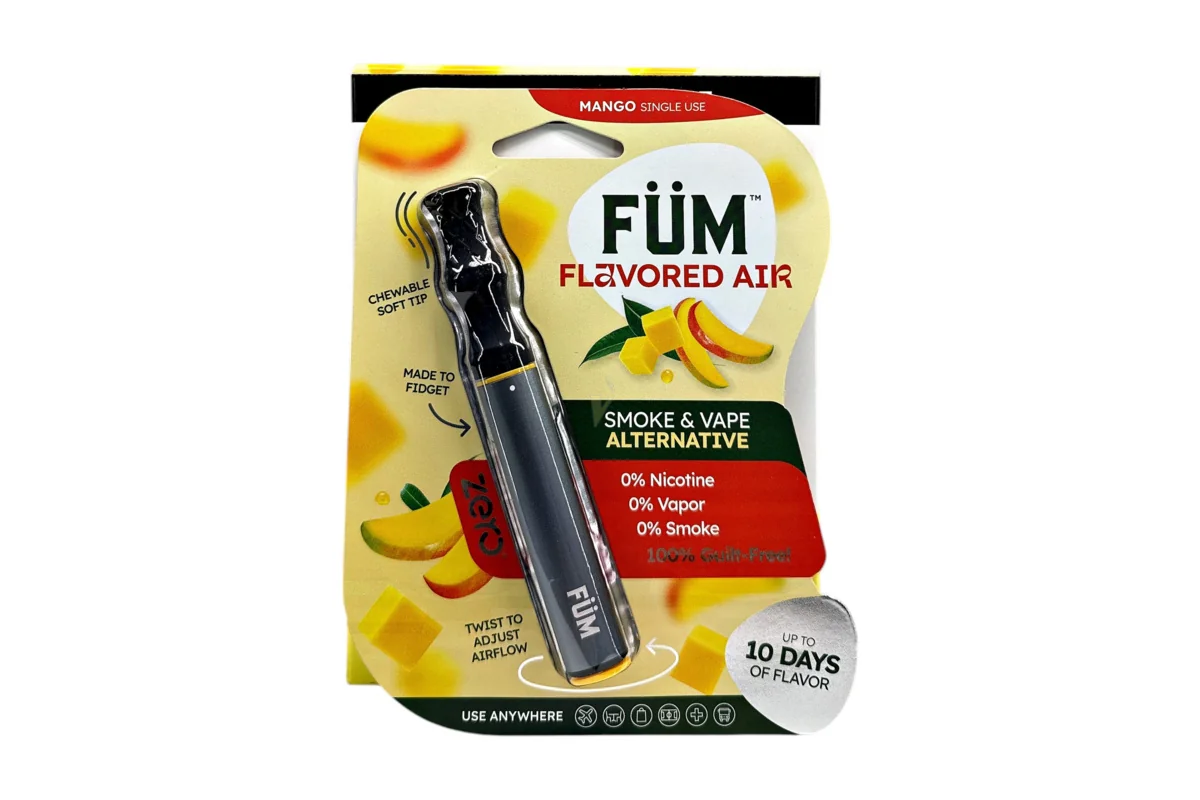
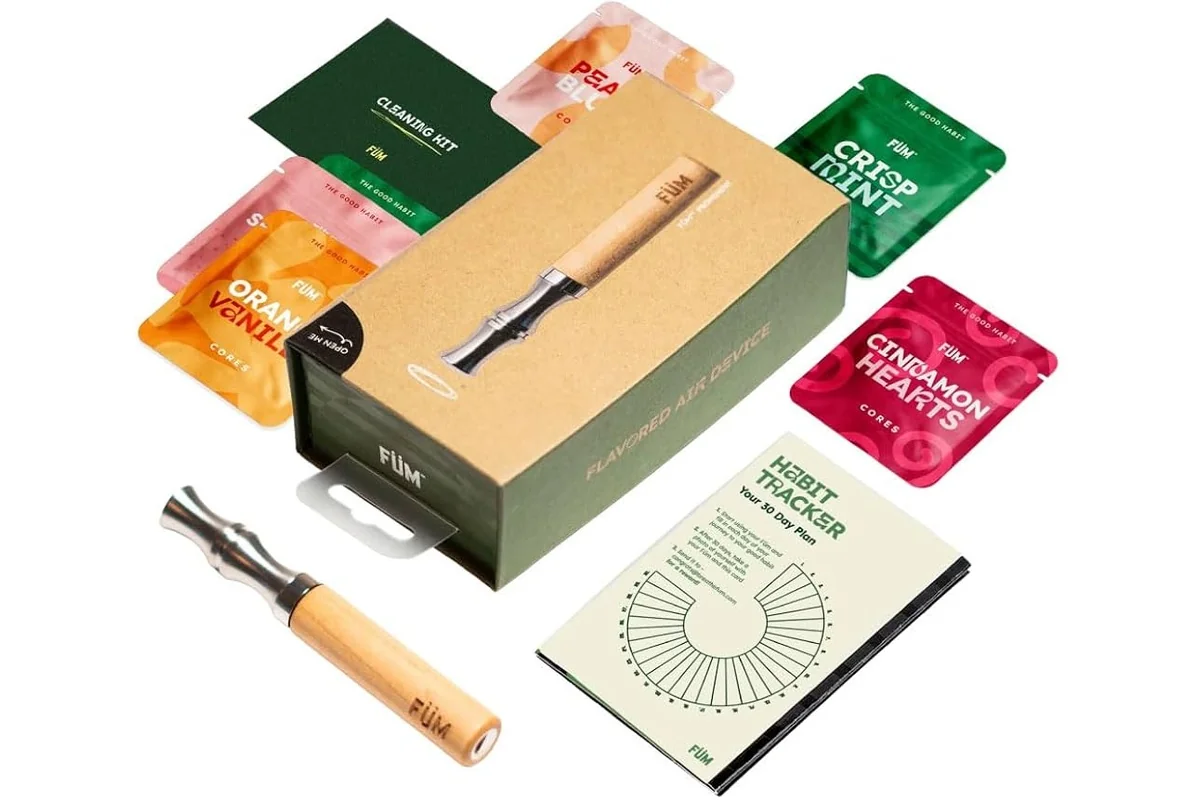
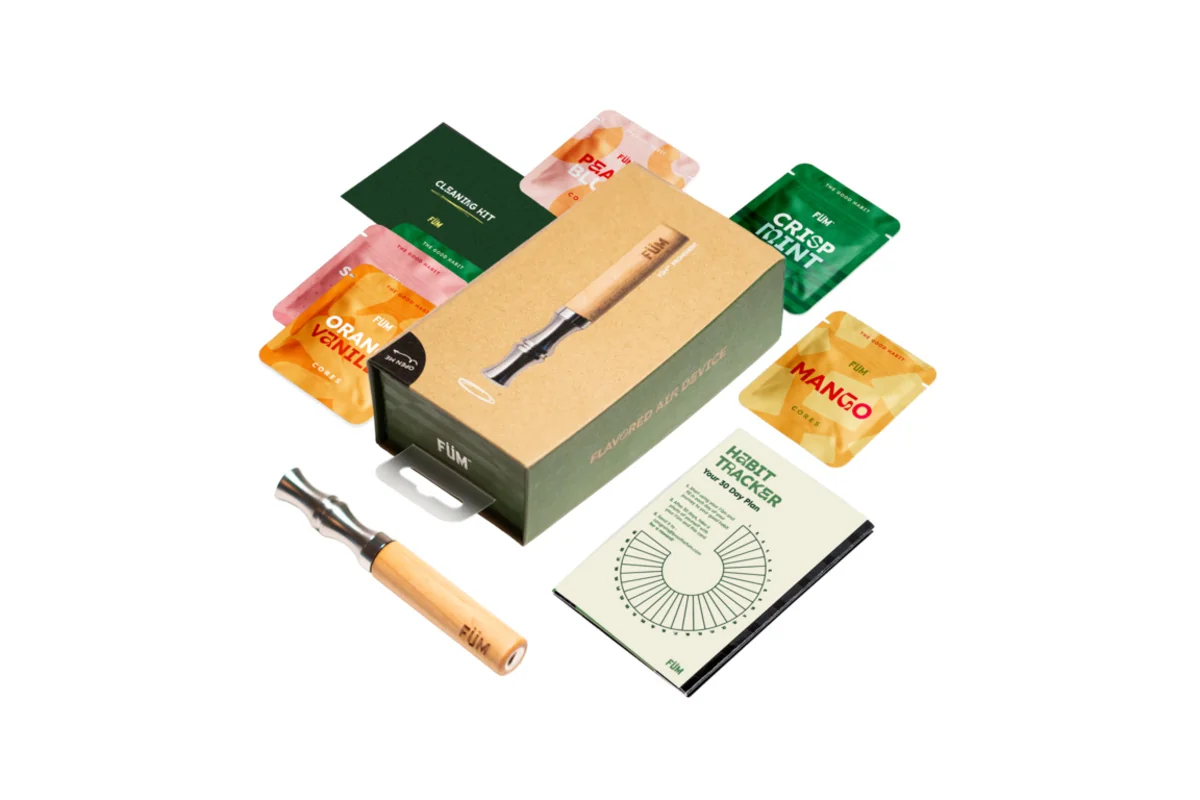
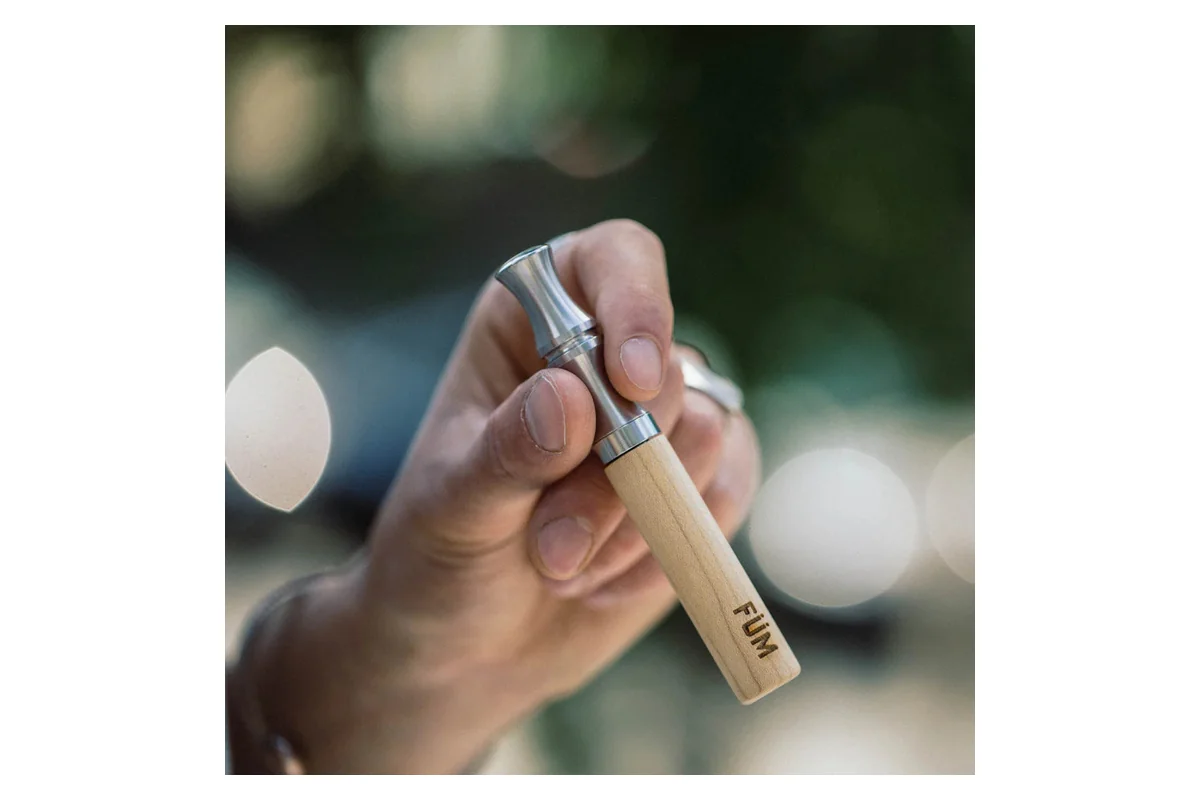
The Füm inhaler is a refillable wooden tube with replaceable cores soaked in essential oils. There is no heating element, no battery, and no vapor.
“Füm vape” is a popular search term, but Füm is not technically a vape. The device has no battery, no heating coil, no nicotine and no visible vapor. Instead, users draw air through an essential-oil-infused core. That makes it meaningfully different from a nicotine vape, but not automatically risk-free. This review looks at what Füm is, what the available testing does and does not prove, what respiratory-health sources say about inhaling essential oils, and how the product compares with vaping and other alternatives.
TL;DR: The Short Answer
- Is Füm a vape? Technically no. There is no heat, no battery, no vapor or aerosol. Air is drawn across an essential-oil-soaked polyester core and inhaled. Functionally it occupies the same “oral fixation” niche as a vape, but the mechanism is different.
- Is Füm safer than a vape? Likely lower-risk than vaping based on mechanism, because it has no nicotine, no heat, no aerosolized propylene glycol or vegetable glycerin, and no combustion byproducts. Lower-risk does not mean risk-free, and long-term inhalation data for this product class is limited.
- Is Füm safe in absolute terms? It may be lower-risk for many healthy adults when used moderately, but there is not enough long-term evidence to call it definitively safe. The American Lung Association, Stanford Medicine and a 2022 NIH-indexed review all caution that inhaling concentrated essential oils carries documented respiratory risks and that long-term data does not yet exist for this product class.
- Should you use it? If it helps you quit nicotine, the harm-reduction trade-off is favorable for most healthy adults. If you have a respiratory condition, are pregnant, or are sensitive to fragrances, talk to a clinician first.
What Füm Actually Is
Video walkthrough showing how the Füm inhaler is held, refilled, and used.
Füm is a hand-held, refillable inhaler shaped like a slim wooden or stainless-steel tube. At one end sits a small replaceable “core”, a polyester cylinder soaked in food-grade essential oils. When you draw on the device, ambient air passes across the oil-impregnated core and into your lungs. There is no heating element, no battery, no liquid reservoir, no aerosolization. Refill packs of flavored cores are sold separately.
Mechanically, Füm sits closer to a passive aromatherapy diffuser than to an e-cigarette. The marketing position is harm-reduction: a tool that addresses the hand-to-mouth ritual and the oral fixation of smoking or vaping without the substance most associated with addiction (nicotine) or the heated aerosol most associated with lung damage.
Why “Füm vape” is a misleading category
A vape (e-cigarette) is, by every regulatory definition, a device that heats a liquid or solid substrate to produce an inhalable aerosol. The U.S. FDA’s deeming regulations classify e-cigarettes as tobacco products regulated under chapter IX of the Federal Food, Drug, and Cosmetic Act. Füm meets none of those criteria, since it neither heats nor aerosolizes anything. Calling it a “Füm vape” is colloquial shorthand, useful for SEO and search behavior, but inaccurate as a regulatory or pharmacological description.
An independent technical breakdown from a chemistry-focused review at weinerphd.com makes the point clearly: MONQ, often grouped alongside Füm, does heat vegetable glycerin into actual vapor and therefore raises different toxicological concerns. Füm does not, and that distinction matters for any honest safety comparison.
Is Füm Safe? An Evidence-Based Assessment
The honest version of this answer has two parts: what Füm has objectively going for it, and what legitimate concerns remain that the product cannot fully resolve.
What Füm has going for it
- No combustion, no heating, no thermal degradation. The most dangerous chemistry in conventional smoking and vaping, formaldehyde formation from heated glycerin, generation of volatile organic compounds from coil-heated flavorings, simply does not happen because nothing in Füm is heated.
- No nicotine. The single most addictive ingredient in cigarettes and most vapes is absent.
- No propylene glycol or vegetable glycerin. These are the standard “vape juice” carriers in conventional e-cigarettes; they are inhaled in significant quantities by vape users and are implicated in some of the chronic respiratory issues attributed to vaping.
- Company-commissioned toxicology testing exists. A 2023 third-party study, commissioned by Füm and conducted by NSF International and Vita Green Analytics, published its summary results on Füm’s site: total exposure across measured compounds was reported as approximately 44% of the safe daily limit established by national monograph agencies, with arsenic and cadmium below detection thresholds, and microbial counts low (partly attributed to the antimicrobial properties of essential oils themselves). The results should be read as company-commissioned testing rather than independent peer-reviewed clinical evidence.
- Not regulated as a tobacco product because it contains no nicotine or tobacco. That also means it has not gone through the type of premarket safety review required for FDA-approved smoking-cessation medicines. It does not appear to be regulated like a nicotine vape or an approved cessation drug.
The legitimate safety concerns
Two things can be true at the same time: Füm is meaningfully safer than a conventional vape, and inhaling essential-oil-laden air is not without its own documented risks.
- Cold-inhalation of essential oils is not risk-free. The American Lung Association explicitly warns that inhaling concentrated essential oils, even unheated, can trigger lung inflammation, coughing, wheezing, and in severe cases lipoid pneumonia (an inflammatory condition caused by inhaling oil-based substances).
- It is unregulated as a medical or tobacco product. No age restriction, no pre-market safety review, no requirement to disclose all minor formulation ingredients. The lack of FDA oversight is what makes the category nimble; it is also what means no government agency has independently signed off on safety.
- “Flavored air” is not the same as “safe air.” A widely cited piece from Stanford Medicine notes that many non-nicotine inhalation products contain solvents and flavoring compounds that overlap with those used in nicotine e-cigarettes, and that those compounds have not been individually tested for inhalational safety at scale.
- Allergens and irritation. Füm’s own product pages note that users who experience irritation may be sensitized or allergic to one of the essential oils, and that pregnant or lactating users should consult a physician before use. Independent reviewer feedback aggregated by sites like The Sober Curator confirms throat irritation as a common complaint.
- The category is too new for long-term data. A 2022 review indexed on PMC / NIH explicitly flags “alternative flavored inhalable products” as a class requiring further respiratory-health research. Chronic-use studies do not yet exist.
Füm vs. Traditional Vaping: A Real Comparison
Putting the differences in one place makes the harm-reduction case clearer.
| Factor | Füm | Traditional vape (e-cigarette) |
|---|---|---|
| Contains nicotine | No | Usually yes (some nicotine-free options) |
| Produces vapor / aerosol | No (passive air across oil) | Yes (heated PG/VG aerosol) |
| Heating element | None | Battery-powered coil |
| Propylene glycol / vegetable glycerin | None | Yes (standard carriers) |
| FDA-regulated as tobacco | No (unregulated) | Yes |
| Combustion byproducts | None | Some (formaldehyde, acrolein at high temps) |
| Third-party toxicology testing | Yes (2023, NSF + VGA) | Varies by brand |
| Lung-oil inhalation risk | Low but present | Different risk profile |
| Long-term safety data | Not yet | Mounting evidence of harm |
| Approximate cost | Device $50–$80, refills ~$15–$30 (subject to change with bundles, subscriptions, and promotions) | Device $20–$60, refills/pods ongoing |
What Real Users Say: Trustpilot & Independent Reviews
At the time this review was checked, Füm’s Trustpilot profile showed a mixed rating across several hundred reviews, with both strong endorsements and recurring complaint patterns. Trustpilot scores change frequently, so readers should check the live profile before buying. Patterns across both Trustpilot and the broader review web (Reddit, sober-community blogs, YouTube reviewers):
- It works as an oral-fixation tool. The strongest positive theme is that the device successfully replaces the hand-to-mouth ritual of smoking or vaping. Multiple users credit it with helping them quit nicotine.
- Flavor experience varies a lot by person and core. Some flavors are well-loved; others draw consistent complaints about being weak, off-tasting, or causing throat irritation after extended use.
- Shipping, billing, and subscription issues drive a lot of negative reviews. The auto-renewal of refill subscriptions and friction in cancelling are the most-cited complaints, mirroring the same pattern across many DTC wellness brands.
- Build quality complaints exist on the wooden version, with some users reporting cracking or staining over time.
- Customer service responsiveness is mixed, with the usual cluster of resolved-with-effort and frustrating-stories that any DTC brand at this scale collects.
The takeaway: as with WorthPoint and many DTC subscriptions, most of the consumer pain is in the billing and customer service tier rather than the product or any safety issue. The product itself does what it advertises for most users who buy it.
Pros and cons at a glance
✓ What Füm does well
- Addresses the hand-to-mouth habit without nicotine
- No heat, no vapor, no thermal degradation
- Independent toxicology testing exists and is publicly summarized
- Many users credit it as part of a successful nicotine quit
- Compact, refillable, no electronics to fail
✗ Legitimate concerns
- Long-term inhalational data does not exist for the category
- Lung-oil inhalation carries documented (though low) risk per the ALA
- Unregulated by FDA, no formal pre-market safety review
- Subscription auto-renew and cancellation friction
- Throat irritation reported by some users
Who Füm Is Realistically For
| If you are… | Füm is… | Why |
|---|---|---|
| A healthy adult actively quitting nicotine | A reasonable harm-reduction tool | It addresses the strongest behavioral component of nicotine addiction (the ritual) without nicotine, propylene glycol, or aerosol. |
| A vape user looking for a “downgrade” | A safer step | Lower toxicological exposure than continued vaping by most measures. |
| A never-smoker curious about “flavored air” | Not recommended | If you do not currently inhale anything, picking up a new inhalation habit, however mild, adds risk without offsetting harm. |
| Pregnant or lactating | Avoid without medical advice | Füm’s own product pages flag this. Some essential oils are contraindicated in pregnancy. |
| Asthma, COPD, or chronic respiratory conditions | Avoid without medical advice | Inhaling essential oils can be a respiratory irritant; talk to your pulmonologist first. |
| Sensitive to fragrances or known allergies to specific oils | Test cautiously | Stop immediately if you notice irritation. Allergic responses to essential oils are well documented. |
| Under 18 | No | Even though the product is unregulated and technically purchasable, picking up an inhalation habit at this age has no upside. |
Alternatives in the Same Niche
The harm-reduction inhalation category has expanded considerably. The major players, with their key distinctions:
| Product | What it does | Mechanism | How it differs from Füm |
|---|---|---|---|
| Füm | Flavored air via essential-oil core | Passive draw, no heat | Reference product (above) |
| MONQ | Aromatherapy “diffuser” handheld | Heats vegetable glycerin into actual vapor | Produces real vapor; different toxicology questions (heated VG) |
| CAPNOS Zero | Realistic cigarette-shaped inhaler | Passive draw; no heat, no nicotine | Form factor is the closest “feels like a cigarette” alternative |
| Cigtrus | Disposable behavioral aid inhaler | Passive draw, citrus oil cartridge | Single-use, cheaper, narrower flavor range |
| Quit Smoking Inhaler (Rx) | Prescription nicotine inhaler | Drug-grade delivery | FDA-approved; contains nicotine, prescribed by clinicians as cessation aid |
How to Buy and Use Füm Safely
If you have decided Füm fits your situation, a few practical notes:
- Buy from the official store or an authorized retailer. Look-alike “FÜM” products from third-party marketplaces have surfaced, and there is no easy way to verify that an off-brand core uses food-grade oils or honest fill ratios.
- Start with one flavor for the first week. Sensitization to essential oils tends to show up in the first several days of regular exposure.
- Stop and review if you notice throat irritation, coughing, wheezing, or any unexpected respiratory symptom. These are signals to consult a clinician, not to “push through”.
- Treat the subscription like any DTC subscription. Auto-renew is on by default. Set a calendar reminder before the first renewal date and decide deliberately whether to continue or cancel.
- Replace cores on the recommended schedule. Cores past their useful life are more likely to harbor microbial growth and lose flavor at the same time.
FAQ
Is Füm a vape?
Technically no. Füm produces no heat, no vapor, and no battery-driven aerosol; air is passively drawn across an essential-oil-soaked core and inhaled. Functionally it occupies the same “oral fixation” niche as a vape, but it is not regulated as one, and the safety profile is different.
Is Füm safer than vaping?
Based on mechanism and the available company-commissioned testing, Füm appears lower-risk than conventional nicotine vaping. There is no nicotine, no propylene glycol or vegetable glycerin aerosol, and no thermal degradation of flavoring chemicals. A 2023 Füm-commissioned third-party toxicology summary placed measured exposure at roughly 44% of established safe-daily-use limits, with arsenic and cadmium below detection. Long-term inhalation safety data for this product class is still limited.
Is Füm safe in absolute terms?
It may be lower-risk for many healthy adults when used moderately, but there is not enough long-term evidence to call it definitively safe. The American Lung Association, Stanford Medicine and a 2022 PMC-indexed review all caution that inhaling concentrated essential oils carries documented respiratory risk, and chronic-use safety data does not yet exist for this product class.
Can Füm help me quit smoking or vaping?
Many users credit it with addressing the hand-to-mouth ritual that makes nicotine cessation hard. Füm is not an FDA-approved smoking-cessation treatment. It is best understood as a behavioral aid that complements (not replaces) evidence-based cessation programs and clinician-supervised plans.
Does Füm contain nicotine?
No. Füm is explicitly nicotine-free. The cores contain essential oils on a polyester substrate; nothing more.
Is Füm FDA approved?
No. Because Füm is not a tobacco product (no nicotine) and is not marketed as a medical device, it falls outside the FDA’s regulatory frameworks for either. This means it is also not subject to the pre-market safety review that prescription cessation products undergo.
Are essential oils safe to inhale long-term?
Long-term safety is not well established. Short-term use may be tolerated by many adults, but respiratory organizations caution against assuming essential-oil inhalation is risk-free. The American Lung Association specifically warns about lung irritation, coughing, wheezing and (in severe cases) lipoid pneumonia from inhaling oil-based substances. Chronic-use longitudinal studies for inhalation products like Füm do not yet exist.
How is Füm different from MONQ?
MONQ heats vegetable glycerin to produce an actual vapor, which means it is closer to a traditional aromatherapy “vape” with the corresponding toxicological questions about heated carriers. Füm is passive and unheated, with neither vapor nor a battery, and that distinction is the central reason its safety profile is different.
Can I cancel my Füm subscription easily?
You can cancel, but expect the standard DTC subscription friction: log into your account first to attempt in-app cancellation, then email customer support with a written cancellation request if that fails. If a charge appears after cancellation, dispute it through your card issuer.
Final Verdict
Füm sits in an uncomfortable but defensible spot: it is meaningfully safer than vaping, it works as a behavioral aid for many people trying to quit nicotine, and the available toxicology data suggests it is unlikely to cause significant harm in moderate use by healthy adults. At the same time, it is unregulated, the inhalation category is too new for long-term data, and pulmonologists are right to flag that “no vapor” does not mean “no risk.”
If you are quitting nicotine and want a tool that addresses the ritual without the chemical addiction, Füm is a reasonable choice with eyes open. If you do not currently smoke or vape, there is no public-health case for picking it up. And in any case, the strongest evidence-supported quit plan remains clinician-supervised cessation programs with approved medications, of which Füm is, at best, a behavioral complement.

César Daniel Barreto
César Daniel Barreto is an esteemed cybersecurity writer and expert, known for his in-depth knowledge and ability to simplify complex cyber security topics. With extensive experience in network security and data protection, he regularly contributes insightful articles and analysis on the latest cybersecurity trends, educating both professionals and the public.
 English
  German
  Danish
  Italian
  Swedish
  Romanian
  Thai
Thai  Vietnamese
  Japanese
  Dutch
Dutch  Korean
  Arabic
  Hungarian