The Evolution of Cash Protection: Consolidation and Technological Shifts in Europe
June 25, 2026 •
As digital economies continue to expand, cash remains a critical component of economic resilience across Europe. Behind the scenes, however, the infrastructure that protects physical currency is undergoing a quiet but significant transformation.
The merger between Oberthur Cash Protection and Feerica marks one of the most notable developments in this space in recent years, combining industrial expertise and technological innovation at a moment when threats to cash handling systems are evolving.
The merger, formalised in late 2025, brings together two companies with complementary expertise. Oberthur Cash Protection, a subsidiary of French banknote and security printing firm, Oberthur Fiduciaire, develops intelligent cash protection systems and security solutions for the Cash-In-Transit, ATM & Retail markets throughout the world. Feerica is a Portuguese firm with over 40 years experience in the development of advanced technological systems, notably IBNS protection solutions.
Thomas Savare, President of François Charles Oberthur Group, stated: “This merger reflects the shared ambition of two industry leaders in intelligent cash protection to form an undisputed global champion. Oberthur Feerica will be ideally positioned to meet the growing demand for new solutions and services in a fast-evolving market.”
Rather than signalling a defensive consolidation in a declining sector, this move reflects a broader shift: the professionalisation and technological upgrading of cash protection, driven by both security challenges and operational demands.
A structural response to evolving threats
According to the official press release issued by Oberthur Fiduciaire, the combination aims to “strengthen technological leadership in cash protection solutions” while expanding the group’s footprint across European and international markets. There is an operational logic behind this.
Cash handling remains exposed to physical attacks, particularly at vulnerable points such as ATMs, retail deposits, and transport routes. While the nature of these attacks has evolved (ranging from ram-raids to explosive assaults), the response has increasingly shifted from deterrence to neutralisation.
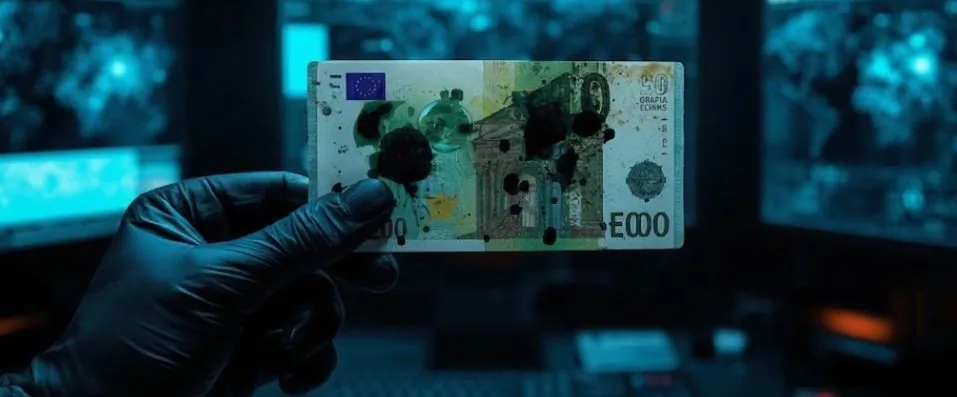
This is where IBNS technologies have become central. Rather than preventing access entirely, these systems render banknotes unusable when a security breach is detected, typically by permanently staining them with indelible ink.
Evidence suggests that such technologies are having a measurable impact. A recent article published by Oberthur Cash Protection highlights a “dramatic decline in ATM physical attacks in France,” attributing this trend in part to the deployment of IBNS systems. While this source reflects the company’s own analysis, the broader trend is consistent with observations from security stakeholders: when stolen cash cannot be recirculated, the economic incentive for attacks diminishes significantly.
Furthermore, the significance of the Oberthur–Feerica merger lies in the shift toward system-level approaches to cash security. Traditionally, protection measures were applied at specific points, such as armoured vehicles, safes, or ATM units. Today, the focus is increasingly on securing the entire lifecycle of cash, from central banks to retail endpoints. Feerica’s expertise in secure containers and logistics complements Oberthur’s technological base in this regard.
By integrating neutralisation technologies directly into transport and storage systems, the combined entity can extend protection beyond fixed infrastructure into more dynamic operational environments. This reflects a broader evolution in the industry: security is no longer a static feature, but an embedded function within logistics chains. In practical terms, this means that protection mechanisms travel with the cash itself, rather than being limited to specific locations.
For financial institutions and cash-in-transit operators, the implications are significant. Reduced exposure to theft can translate into lower insurance costs, simplified operational procedures, and improved staff safety. In parallel, regulators and central banks—long concerned with the integrity of physical currency are likely to view such developments as contributing to systemic stability.
Cash security has once again become a strategic issue
The merger also reflects a wider reassessment of the role of cash itself. Predictions about the “end of cash” have circulated for years, particularly following the rapid growth of contactless and mobile payments and highly digitised financial systems. Yet recent crises have highlighted the continued importance of physical currency as a resilience tool.
European central banks have become increasingly explicit on this point. In an April 2025 speech on European payment sovereignty, Piero Cipollone stated that “cash remains a cornerstone of the European financial system and is currently our only sovereign means of payment.” The same speech stressed that maintaining cash infrastructure is increasingly viewed as a resilience issue rather than a legacy cost. “The continued strong demand for cash highlights the importance of ensuring that it remains a convenient, secure and universally accepted means of payment,” Cipollone added.
This renewed focus is partly driven by concerns around operational resilience. Even as digital payments expand rapidly, central banks and regulators continue to frame cash as an essential fallback mechanism during cyber incidents, infrastructure failures or geopolitical crises.
A 2024 Reuters report on the decline of cash usage in Europe highlighted this tension. While electronic payments continue to gain market share, several European authorities have simultaneously reinforced contingency planning around physical currency access. In Sweden, for example, authorities have advised citizens to keep cash reserves in case digital payment systems become unavailable during a crisis.
This partly explains why investment in cash infrastructure continues despite the rise of digital finance. Rather than treating physical and digital payments as competing systems, European institutions increasingly frame them as complementary layers of resilience.
The Oberthur–Feerica merger fits directly into this logic. Combining physical security technologies with logistics expertise allows the new entity to position itself around continuity and resilience rather than simply anti-theft protection. The European dimension is particularly important. The continent remains fragmented in terms of cash infrastructure, ATM protection standards and logistics networks. Many countries still rely on different generations of security equipment, creating uneven levels of vulnerability.
Against this backdrop, the merger could help establish a stronger European benchmark in the sector. The combined company’s proposition lies not only in individual technologies, but in its ability to offer integrated protection systems at scale. Patrice Rullier, Managing Director at Oberthur Cash Protection, stated that the merger would create “a stronger, more agile company, one that leads the global ATM and cash cycle security market.”
That matters because security threats are becoming more sophisticated and more transnational. Criminal networks involved in ATM attacks or cash robberies increasingly operate across borders, forcing security providers to think in similarly European terms. Europol has repeatedly warned about the growing mobility of organised crime groups involved in property crime and ATM attacks across the EU.
The merger may therefore reflect a broader trend toward consolidation within the cash protection industry. Scale increasingly matters, not only for industrial capacity, but also for research, innovation and the deployment of security technologies across multiple markets.

César Daniel Barreto is an esteemed cybersecurity writer and expert, known for his in-depth knowledge and ability to simplify complex cyber security topics. With extensive experience in network security and data protection, he regularly contributes insightful articles and analysis on the latest cybersecurity trends, educating both professionals and the public.
 English
  German
  Danish
  Italian
  Swedish
  Romanian
  Thai
Thai  Vietnamese
  Japanese
  Dutch
Dutch  Korean
  Arabic
  Hungarian