Escrocherii criptografice
17 septembrie 2022 • César Daniel Barreto
Dacă ești la curent cu evenimentele actuale, cel mai probabil ai auzit de Bitcoin sau de alte tipuri de criptomonede. Criptomoneda a fost la modă de mulți ani și s-a răspândit rapid în întreaga lume ca un incendiu. Acest lucru a prezentat noi riscuri pentru potențialii investitori. Oamenii dornici să se alăture tendinței investesc în diferite forme de cripto fără a lua măsuri de precauție de bază. Ca urmare, sunt mai predispuși să fie exploatați.
Din cauza lipsei de reglementare pentru criptomonede precum Bitcoin, escrocii și hackerii au găsit modalități ușoare de a face bani rapid. Au fost raportate în mass-media cazuri de oameni care au câștigat milioane din activități ilegale cu cripto.
Pe măsură ce oamenii devin din ce în ce mai interesați de Bitcoin, la fel și escrocii și artiștii de înșelăciune. Majoritatea oamenilor nu sunt familiarizați cu metodele lor, așa că escrocii și trișorii se bucură de o zi de câmp în lumea cripto. Escrocii au dezvoltat modalități sofisticate de a înșela și de a profita de investitorii neavizați.
Cea mai bună modalitate de a evita să fii înșelat este să cercetezi și să citești cum funcționează de obicei aceste escrocherii. În acest articol, vom explora unele dintre cele mai populare escrocherii cripto și vom vedea cum reușesc exact să păcălească oamenii. Te poți proteja de a deveni victima uneia dintre aceste scheme având o mai bună înțelegere a riscurilor implicate și a semnalelor de alarmă la care să fii atent.
Evoluția Bitcoin și a criptomonedelor
Un Bitcoin este un număr digital creat de o funcție matematică numită “HASH”. Este accesat printr-o cheie “publică” și una “privată” și este deținut într-un blockchain, care este un registru digital. Registrul nu este păstrat într-o singură locație, ci în multe.
Poți doar să adaugi noi tranzacții în registru; nu poți schimba sau șterge o tranzacție existentă. Bitcoin și alte criptomonede funcționează pe un principiu similar. Astfel, oricine poate vedea toate tranzacțiile care au avut loc vreodată, dar nimeni nu știe cine deține care Bitcoins.
Când vrei să cumperi ceva cu Bitcoin, trebuie să găsești un vânzător dispus să accepte Bitcoin ca plată. Tranzacțiile pot fi finalizate printr-un schimb cripto sau direct între persoane.
Alte firme au urmat exemplul Bitcoin creând propriile lor versiuni de monedă digitală. Acum, există o mulțime de criptomonede alternative, multe dintre ele fiind copii mici care schimbă oferta totală de monede sau algoritmii de hashing. Ripple și Litecoin sunt două exemple notabile. Ethereum, pe de altă parte, a fost creat pentru a fi mult mai mult decât o monedă digitală. Este o platformă descentralizată care poate rula contracte inteligente sau programe de calculator care se execută automat atunci când anumite condiții sunt îndeplinite. Acest lucru permite o lume cu totul nouă de posibilități, cum ar fi dezvoltarea de aplicații descentralizate (dapps).
Criptomonedele au captat imaginația multor oameni, iar popularitatea lor a cunoscut o creștere meteorică în ultimii ani. Cu toate acestea, acest interes a stimulat o bună parte din escrocheriile cripto. Mai jos, vom contura unele dintre cele mai comune tipuri de escrocherii cripto de care să te ferești.
Escrocherii prin phishing

Phishing is the illegal act of obtaining sensitive and confidential details, such as usernames, passwords, private keys or payment information, through fake websites and misleading links.
Users are fooled into thinking they are entering their information on a trusted website or following a legitimate link that has been shared with them through emails, messages or Google ads.
What usually happens is that users receive an email giving them the false idea that something has happened to their account or wallet and that they need to fix it by following a link.
The link directs them to a fake website, usually designed to resemble the original website. It may use the same design, color scheme, logo and font style, forcing visitors to believe they are in the right place.
Once the user enters the information, it is passed on to the scammers, who can then use it however they want. They may use the information straight away or store it for later, depending on how much they believe they can gain from the account.
In plain terms: how a phishing attack actually reaches you
Think of it as a fake shopfront. The attacker copies a website you already trust, then needs one thing only: for you to walk through the wrong door.
The usual chain has four links. First, contact — an email, an SMS, a Telegram or Discord message, or a paid ad sitting above the real result in Google. Second, a reason to hurry — a “suspicious login”, a “wallet migration”, a refund waiting for you. Third, the fake page — visually identical to the real one, sitting on a domain that is one character off. Fourth, the harvest — whatever you type is sent straight to the attacker, often while the page shows a spinning loader so you do not realise anything went wrong.
The important part: no software on your computer has been broken. Nothing was hacked. You were persuaded. That is why antivirus rarely stops phishing and why the defence has to be a habit rather than a tool.
MyEtherWallet is a prime example of this style of scam. Fake websites and applications were designed with the same look as the official platform, making users feel safe enough to provide the same information they would normally enter on the real website.
This resulted in huge losses for users. To think that a fake MyEtherWallet app reportedly became one of the top apps in its category is scary. How easily it spread and affected so many users shows how vulnerable the cryptocurrency industry can be and how exposed users are to these attacks.
Another method is the use of fake airdrops. This is when scammers pretend to represent legitimate companies and offer free tokens to large numbers of people.
Along with the offer comes the need to download an application, connect a wallet or visit a portal created by the same individuals looking to make easy money at your expense.
Users may be asked to enter their usernames, passwords, seed phrases or private keys. Once this information is provided, the scammers may gain access to the wallet and drain the account.
In plain terms: why a “free token” airdrop is such an effective hook
An airdrop is a real thing. Genuine projects do hand out free tokens to early users, and that is exactly what makes the fake version work — the offer is not obviously absurd.
The trick is what the offer asks for in return. A real airdrop never needs your seed phrase, your private key or your exchange password, because a seed phrase is not a login: it is the wallet itself. Anyone holding it owns every coin in that wallet, permanently, with no support line to call.
The second version is quieter. Instead of asking you to type anything, the site asks you to “connect wallet” and approve a transaction to claim your tokens. The approval you sign is not a claim — it is permission for the attacker’s contract to move your tokens whenever it likes. The wallet may look untouched for days before it is emptied. Read what you are signing, and treat unlimited spending approvals as a decision, not a formality.
How to Avoid Being Scammed
Now the question is, what needs to be done to avoid these activities?
The answer is simple. Be informed.
Keep yourself up to date. The more you know about what is happening around the world, the better. Subscribe to trusted news websites and read as much as possible.
Discuss these subjects with people who understand them and talk about the latest scams. It requires some effort on your part. Be curious. Know more.
A few things to keep in mind are as follows.
Check the Website Address
Make sure the website address you are visiting is the same one you normally use.
Usually, there are a few small differences that are ignored or difficult to notice. A scammer may change one letter, add an extra word or use a slightly different domain.
But this is your hard-earned money we are talking about here, so you have to be careful every single time you are asked to enter your details.
Double-check the address.
It should start with “https” and not just “http,” but remember that HTTPS alone does not prove that the website is legitimate. Scam websites can also use HTTPS.
The best option is to bookmark the official website or type the address manually into your browser.
In plain terms: what a lookalike address actually looks like
Read a domain from right to left, not left to right. The part that decides where you really are is the last two pieces before the first single slash — everything to the left of that can be invented freely by whoever owns the domain.
So login.yourexchange.com.secure-verify.io is not your exchange. It is secure-verify.io, wearing your exchange’s name as a costume. The same goes for a hyphen where there should be nothing (your-exchange.com), an extra word (yourexchange-wallet.com), a swapped letter (yourexchagne.com), a different ending (.co, .net, .app instead of .com), and characters from another alphabet that render identically to Latin ones.
This is also why HTTPS proves so little. The padlock only means the connection is encrypted between you and whoever owns that address — and a scammer can get a certificate for their own fake domain in minutes, for free. Encrypted does not mean honest. A bookmark, or typing the address yourself, removes the guesswork entirely.
Go With Your Gut Feeling
If the website does not feel right, something looks off or something feels different from your normal routine, stop.
Do not proceed without verifying it.
Call a friend who knows a thing or two. Contact the company through its official website. Do something. Just do not go with the flow.
Watch Out for Urgency
Another very common tactic these fishy websites use is creating a sense of urgency.
They give warnings. They use deadlines. They force the user to take action as quickly as possible, sometimes using big, bold red titles with words such as “HURRY,” “URGENT” or “ACCOUNT SUSPENDED.”
The aim is to create panic and make users act without thinking rationally. Most of the time, the result is terrible.
If a message is rushing you, stop and check the account directly through the official website. Do not use the link in the message.
In plain terms: why urgency is the giveaway, not the emergency
Urgency is not decoration on the scam. It is the scam. Careful checking takes a couple of calm minutes, so the attacker’s whole job is to make sure you never get those minutes.
It works because fear narrows attention. Told that your account is being drained right now, you stop reading the address bar and start looking for the button that makes the problem go away. That is the moment the fake page is built for.
The defence needs no expertise at all: any message that pressures you is, by that fact alone, a message you should not act on from inside the message. Close it. Open the site the way you normally do — your own bookmark, your own typing, your own app. If the emergency is real, it will still be there on the official dashboard. It almost never is.
Use a Strong Password
Always set a strong password.
More importantly, remember that password or store it safely in a trusted password manager. It is very common for people to forget their passwords and lose access to their own wallets or accounts.
Use a different password for every account and enable two-factor authentication whenever possible.
Never give anyone your password, private key or seed phrase. A real wallet company or customer support agent should never ask for this information.
Later on, we will explain in more detail how to avoid scams and the main dos and don’ts.
In plain terms: password, private key and seed phrase are three different things
People use these words interchangeably, and scammers rely on that confusion.
A password unlocks an account on somebody else’s service — an exchange, for example. If it is stolen, the company can freeze the account and give it back to you.
A cheie privată authorises spending from one specific address. Whoever holds it can move those funds. It cannot be changed or revoked.
A seed phrase — the 12 or 24 words written down when you created the wallet — regenerates every private key in that wallet. It is not a password for the wallet: it is the wallet. Type it into a website and the money is gone, usually within minutes, with nobody to appeal to.
So the rule has two halves. Passwords: unique per account, stored in a password manager, with two-factor authentication turned on — and prefer an authenticator app or a hardware key over SMS codes, which can be stolen through a SIM swap. Seed phrase: never typed into any website, any support chat, any “wallet validation” tool, ever. Legitimate support will never ask, because legitimate support cannot use it for anything except stealing from you.
Mining Scams
Mining scams are another interesting part of the cryptocurrency world. Many of them use cloud mining.
Now, not all cloud mining is illegitimate. Some companies use cloud mining for legitimate purposes. But, as always, there are a few that have used cloud mining negatively and carried out elaborate schemes to scam people.
Cloud mining is the process of mining cryptocurrencies through a remote service. There are companies that allow people to open an account with them and, in return, let users participate in the mining process.
The process is conducted through the company’s equipment, removing the need for users to purchase hardware or deal directly with equipment maintenance and energy costs.
There are legitimate operations out there, and there are people who participate in them. At the same time, there are companies that are completely on the wrong side of the law and every ethical boundary.
In plain terms: what you are actually buying with cloud mining
You are renting a share of someone else’s machines and paying for the electricity they burn. In exchange you receive whatever those machines earn, minus the operator’s fee.
That is the whole model, and it explains why the margins are thin even when everything is honest. The operator has already paid for the hardware and pays the power bill; they only sell you a contract if their cut makes it worth more to them than mining it themselves. You are, by design, on the less profitable side of that trade.
It also explains why the fraudulent version is so easy to run. Nothing about a cloud mining contract is visible to the buyer. There is no machine you can point at, no hash rate you can independently confirm, no way to tell rented capacity from a spreadsheet. A dashboard showing your “daily earnings” costs nothing to fake, and the payouts can be funded entirely by the next customer’s deposit — at which point it has stopped being mining and become a Ponzi scheme with mining-themed graphics.
The Returns
Returns are one way of looking at these operations and judging whether they may be trying to sting you.
But be careful. Very high or guaranteed returns are usually a bigger warning sign than low returns.
Cryptocurrency mining depends on electricity prices, hardware performance, mining difficulty, fees and the value of the cryptocurrency being mined. No legitimate company can guarantee massive profits without any risk.
If a company promises easy money, fixed daily profits or returns that sound too good to be true, there is a good chance something is wrong.
Steer clear of such setups. They are not for you. Or anyone, for that matter.
In plain terms: why a fixed daily return is impossible in mining
Mining income moves every single day, because five separate things underneath it move every single day.
Mining difficulty rises as more machines join the network, so the same hardware earns less over time — this is automatic and continuous. The coin price swings, and your earnings are paid in that coin. Electricity is the largest running cost and is priced by the hour in many markets. Hardware ages, fails and gets outpaced by newer models. Network fees and block rewards change too — Bitcoin’s reward halves roughly every four years, cutting the income from identical work in half overnight.
Any one of those makes a guaranteed number impossible. All five together make it a claim nobody could honour even if they wanted to. So when an operator quotes a flat “1.5% per day”, they are not describing mining output; they are describing a marketing figure they have chosen. The money to pay it has to come from somewhere, and if it is not coming from the machines, it is coming from the next depositor.
Transparență
Is the company allowing you to examine how it works, what tools it uses and how it plans to take the business forward?
If not, you should be concerned that there is something it does not want you, or anyone outside its inner circle, to know.
Transparency is very important. Every user has the right to know about the company they are going to be involved with.
You should be able to find information about the owners, business address, equipment, fees, contracts, withdrawal rules and how returns are calculated.
There should be no question about it.
In plain terms: how to check transparency yourself, in ten minutes
Transparency is not a feeling about a website. It is a list of specific claims you can go and verify.
The people. Are named executives listed, and do those names exist outside this company’s own website — conference talks, an employment history, press coverage? Photographs that appear on stock-image sites, or a team page with no surnames, answers the question on its own.
The company. A registration number and address can be checked in the relevant national companies register in a couple of minutes. A serviced-office address shared with hundreds of other entities, or a registration two months old behind a decade of claimed operating history, is a contradiction worth taking seriously.
The machines. Which model, how many, in which facility, at what power cost? Honest operators publish this because it is their pitch. Photographs of a data centre prove nothing — reverse-image search them.
The exit. Withdrawal minimums, fees, processing times, and whether payouts stop during “maintenance”. This is where the complaints appear first, so search the company name together with the word withdrawal and read what people say when they try to leave.
If asking any of this directly gets you a support agent who changes the subject or offers a bonus for depositing more, that is your answer.
Escrocherii cu Malware
A malware portal or infected application can be used to attack your computer and hit you exactly where it hurts.
Malicious software is created and placed inside downloads, wallet applications, browser extensions, email attachments or fake updates.
Once the computer is infected, the malware can take control of certain functions and steal private information or data in the way it was designed to do.
There are numerous ways through which the job can be done.
One example is malware that can compromise a Bitcoin wallet. When you attempt to send coins to a friend in need, the original wallet address may be replaced with a fake one belonging to the scammer.
Cryptocurrency Clipboard Hijackers
One type of malware scam that received attention was known as a cryptocurrency clipboard hijacker.
It used the Windows clipboard as its weapon.
Some of these scammers used the clipboard to monitor thousands of cryptocurrency addresses, but one reported version was much bigger. It was said to monitor around 2.3 million addresses.
The malware used the copy-and-paste mechanism of Windows systems.
Cryptocurrency addresses are usually long and difficult to remember. When users copied and pasted an address, the malware replaced it with a forged address belonging to the scammer.
The transaction would then land in the wrong hands.
Because cryptocurrency transactions are usually irreversible, the money may be impossible to recover once it has been sent.
Always compare the wallet address before confirming a transaction. Check the first and last several characters, and for a large payment, consider sending a small test transaction first.
In plain terms: how a clipboard hijacker steals a payment
Every time you copy something, your computer holds it in one shared pocket called the clipboard. Any program running on that machine can read that pocket, and any program can quietly change what is in it. That is not a flaw being exploited — it is how the clipboard has always worked.
So the malware does nothing dramatic. It sits idle, watching what you copy, and does nothing at all until the thing you copied looks like a crypto address. At that instant it swaps your copied address for one of its own, chosen from its stored list to match the same currency and the same general shape. Then it goes quiet again.
What makes it so effective is the psychology of the paste. You copied the correct address one second earlier, so you already know what should be in the box. Addresses are long, meaningless strings that the eye skims rather than reads, and the substitute often begins with similar characters. You glance, it looks right, you confirm — and the payment is final, on a public ledger, sitting in a stranger’s wallet.
Two habits defeat it completely. Compare characters at the start și at the end of the address after pasting, not just at the start. And for anything substantial, send a small test amount first, confirm it arrived, then send the rest.
How to Spot Possible Malware
- Your computer shows signs of slowing down.
- Pop-up ads begin appearing far too often and become difficult to ignore.
- You notice unusual activity that you were not responsible for.
- Programs open or close by themselves.
- Your browser settings suddenly change.
- Your security software becomes disabled.
- You see login attempts or transactions that you did not authorize.
If you believe your computer is infected, disconnect it from the internet and stop entering passwords or accessing wallets until the device has been checked.
In plain terms: what to do first if you think you are infected
Order matters more than speed here, and the instinct most people follow — log in and check the accounts — is the one that does the damage.
Disconnect first. Pull the Wi-Fi or the cable. Anything still being sent to the attacker stops at that moment.
Do not log in to anything from that machine. Not the exchange, not the email, not the wallet. If the device is compromised, every password you type is simply a new password being handed over.
Change passwords from a different device — a phone on mobile data, another computer — starting with the email account, because that is what resets everything else. Then the exchanges, then whatever shares those passwords.
Assume the seed phrase is gone if it was ever typed, photographed or stored on that machine. Move the funds to a wallet created on a clean device. Changing the password on the old wallet does nothing; the seed phrase still opens it.
Clean the machine properly. A scan that finds nothing is not proof of safety. For a device that held real money, a full wipe and reinstall is the only honest reset.
Fake Wallets
Fake wallets are also a favorite of scammers.
They create a fake wallet to trick people into revealing their passwords, private keys or seed phrases.
Bitcoin Gold was new to the market, and users who were looking to claim their coins were directed to a fake wallet that went by the name of mybtgwallet.com.
Thinking it was the real thing, users provided information relating to their private keys and were deprived of millions of dollars as a result.
The scam emptied wallets and reportedly cost users a combined amount close to $3.5 million.
Keeping in mind the number of fake Google ads and advertisements being thrown at you every day, you have to be very careful when visiting a website or downloading a wallet.
The ideal thing to do is to keep the original website bookmarked or type the address manually into your browser.
Only download wallets through the official project website or verified app-store page.
How to Spot a Fake Wallet
- Information about the wallet or its business model is missing.
- There is no presence on major cryptocurrency or security websites that usually cover important platforms.
- The platform has only recently been created.
- The developers or company owners cannot be identified.
- The wallet asks for your private key or seed phrase without a valid reason.
- The website uses “http” instead of “https,” meaning the connection is not secure.
- The app appears mainly through paid advertisements rather than official channels.
- The reviews seem copied, repetitive or far too positive.
Remember that HTTPS does not automatically mean a website is safe. Always verify the domain, the company and the official download link before entering any sensitive information.
In plain terms: how to verify a wallet before you install it
The dangerous moment is not using the wallet — it is choosing it. Almost every fake wallet is found the same way: through a search result, an ad, or an app store listing, rather than through the project itself.
Start from the project, never from the search box. Find the official website through a source you already trust, then follow its download link to the app store. That single reversal removes the most common trap, because a paid ad can sit above the real result and a store listing can carry the real logo.
Read the listing sceptically. Check the publisher name against the one on the official site, the install count against how well known the wallet is, and the release date — a wallet claiming years of history with a listing from last month is a copy. Reviews that are numerous, five-star, short and posted within the same few days are bought.
Watch the first screen. A genuine wallet either creates a new seed phrase for you or asks you to type an existing one to restore your own wallet — offline, on the device. If the first thing the app or site asks for is a seed phrase in order to “verify”, “sync”, “validate” or “unlock rewards”, close it.
Test small. Before moving anything meaningful, send a small amount in, send it back out, and confirm both transactions on a block explorer. A wallet that accepts deposits but stalls on withdrawals has told you what it is while it still costs almost nothing to find out.
ESCROCHERII ICO
De la apariția criptomonedelor, investitorii instituționali au arătat un mare interes pentru activele digitale. Cu toate acestea, multe ICO-uri au devenit fraude, cu afaceri care dispar odată ce obțin o sumă mare de bani.
Deoarece banii au fost deja strânși și niciun organism de reglementare nu supraveghează deciziile creatorilor cu privire la aplicarea acestora, ICO-urile sunt libere să facă ce vor cu banii. Pot pleca ușor cu banii sau pot lucra în limitele legii.
Escrocheria Giza a fost un exemplu infam de activitate frauduloasă ICO când aproape $2 milioane au fost luate de la investitori neavizați. Când principalul furnizor a anunțat că a întrerupt legăturile cu Giza din motive care ar face pe orice susținător să fugă, semnalele de avertizare au început să fluture. Curând au urmat acuzații de fraudă și nimeni nu și-a putut recupera banii.
Dezvoltatorii proiectului Enigma Catalyst au fugit, de asemenea, cu $45 milioane, în ciuda faptului că aveau un produs funcțional.
Cum să eviți escrocheriile ICO
Când iei în considerare investiția într-un ICO, fă-ți propriile cercetări și nu investi niciodată mai mult decât îți poți permite să pierzi. Citește whitepaper-ul și înțelege proiectul înainte de a lua orice decizie.
Pentru a găsi un ICO de încredere, caută recenzii online pozitive și o prezență puternică în comunitate. În plus, verifică dacă proiectul are un produs funcțional și o foaie de parcurs clară pentru viitor.
Escrocheria Pump and Dump
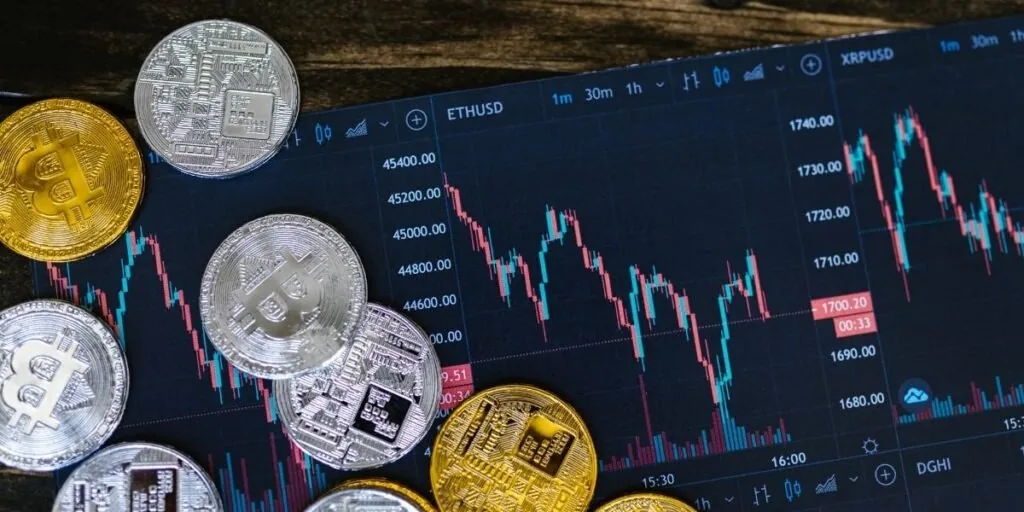
Schemele pump-and-dump sunt o formă de fraudă de investiții în care indivizii investesc într-o companie care este fie supraevaluată, fie destinată să eșueze. Escrocii îi conving pe acești investitori să investească bani în escrocherie înainte de a-și vinde acțiunile la un preț ridicat. Deoarece victimele pot avea dificultăți în a determina dacă a existat un potențial real de dezvoltare în cadrul firmei, astfel de escrocherii vizează adesea criptomonedele digitale.
Unii investitori pot fi reticenți să investească într-un proiect, dar sunt încurajați de promisiunea unui jucător major care investește sau se asociază. Acest lucru face ca oamenii să creadă în proiect, chiar dacă nu pare foarte promițător altfel.
Escrocii ridică prețul făcând mulți oameni să creadă în el. Când au terminat și prețul nu mai poate crește, vând totul deodată, determinând prețul să scadă rapid.
Acest lucru se poate întâmpla în câteva minute!
Un exemplu de escrocherie cripto pump-and-dump este Escrocheria Bitconnect.
Bitconnect a fost o criptomonedă care a fost promovată ca un program de investiții cu randament ridicat. Promitea randamente de până la 40% pe lună, ceea ce era mult mai mare decât orice altceva pe piață.
Mulți oameni au investit în Bitconnect, dar prețul a scăzut curând și au pierdut toți banii.
Un alt exemplu de escrocherie cripto pump-and-dump este Escrocheria PlusToken.
PlusToken a fost o criptomonedă promovată ca o modalitate de a câștiga dobândă pe investiția ta. Promitea randamente de până la 9% pe lună, ceea ce era mult mai mare decât orice altceva pe piață.
Oamenii au investit în PlusToken, dar prețul a scăzut curând și au pierdut toți banii.
Cum să eviți escrocheriile Pump and Dump
Înainte de a investi în orice criptomonedă, fă-ți temele. Nu investi într-o monedă nouă dacă există multe articole de știri, postări pe blog sau eseuri despre cât de populară este. Caută moneda și citește whitepaper-ul pentru a afla mai multe despre cine a creat-o și de ce. Acest lucru te va ajuta să determini dacă există scheme pump-and-dump în desfășurare cu această monedă.
Schemele Ponzi Cripto

Schemele Ponzi sunt un tip de fraudă care implică informarea potențialilor investitori că vor obține un profit prin recrutarea de noi membri. Problema este că, în cele din urmă, nu sunt suficienți oameni noi care să investească bani în schemă și aceasta se destramă deoarece nu există suficiente venituri pentru a susține pe toți cei care au investit. Când se întâmplă acest lucru, toți cei care au investit în schemă sunt înșelați, indiferent de câți bani au fost aduși inițial sau unde au fost cheltuiți. Escrocii fac un profit rapid și apoi își lasă victimele în urmă. Schemele Ponzi au infiltrat lumea criptomonedelor și înșală investitorii din întreaga lume.
Daunele financiare cauzate de aceste tipuri de escrocherii sunt devastatoare.
Forsage-crypto, o schemă Ponzi cripto care s-a întins pe mai bine de doi ani, a păcălit investitorii permițându-le să participe la tranzacții care foloseau contracte inteligente Ethereum, Tron și Binance. Modelul de afaceri de marketing afiliat al Forsage-crypto a atras investitorii cu garanția profiturilor. După cum se menționează pe site-ul SEC, Forsage a atras milioane de investitori de retail oferind o platformă ușor de utilizat pentru blockchains-urile Ethereum, Tron și Binance. În plus, a utilizat în mod constant banii investiți recent pentru a rambursa participanții anteriori - o trăsătură caracteristică a schemelor piramidale.
Un alt exemplu de schemă Ponzi cripto este escrocheria OneCoin. Schema OneCoin a fost promovată ca o modalitate de a câștiga bani prin investiția într-o nouă criptomonedă. Cu toate acestea, compania a fost acuzată că ar fi o schemă Ponzi. Potrivit site-ului companiei, a fost înființată în Vietnam, dar țara a contestat ulterior această afirmație. În plus, mai multe dezastre din mai multe țări și teritorii din întreaga lume au dezvăluit că OneCoin este fraudulos.
Cum să recunoști o escrocherie Ponzi
- Venitul este exponențial de mare
- Brokeri fără licență
- Lipsa de transparență
- Lipsa de informații despre companie
- Investiții neregistrate
Dacă ai fost deja înșelat, există câteva lucruri pe care le poți face:
- Contactează SEC la https://www.sec.gov/tcr. SEC este autoritatea de reglementare a valorilor mobiliare din SUA și îți va putea oferi mai multe informații despre ce să faci în continuare.
- Depune o plângere la FBI la https://www.ic3.gov/Home/ComplaintChoice. Ei vor putea investiga escrocheria și te vor ajuta să-ți recuperezi banii.
- Contactează Comisia Federală pentru Comerț la https://www.ftccomplaintassistant.gov/. Ei te vor putea ajuta să-ți recuperezi banii și, de asemenea, să împiedice escrocul să continue să înșele alte persoane.
- Contactează FINRA la https://www.finra.org/. FINRA este autoritatea de reglementare financiară din Statele Unite. Poți depune o plângere și raporta orice potențiale escrocherii sau activități suspecte ale unui brokeraj.
Gânduri Conclusive
Cea mai bună modalitate de a evita escrocheriile cripto este să-ți faci temele. Cercetează orice criptomonedă sau proiect înainte de a investi în el. De asemenea, verifică sursa oricăror articole de știri sau postări pe blog despre o criptomonedă înainte de a le crede. În cele din urmă, dacă ceva sună prea bine pentru a fi adevărat, probabil că este!

César Daniel Barreto
César Daniel Barreto este un apreciat scriitor și expert în securitate cibernetică, cunoscut pentru cunoștințe aprofundate și capacitatea de a simplifica subiecte complexe de securitate cibernetică. Cu o vastă experiență în securitatea și protecția securitate a rețelelor și protecția datelor, contribuie în mod regulat cu articole perspicace și analize privind cele mai recente tendințe în domeniul securității cibernetice, educând atât profesioniștii, cât și publicul.
 Romanian
  English
  German
  Danish
  Italian
  Swedish
  Thai
Thai  Vietnamese
  Japanese
  Dutch
Dutch  Korean
  Arabic
  Hungarian